Machines That Dream in Dread: Why AI Horror Has Crawled Under Our Skin
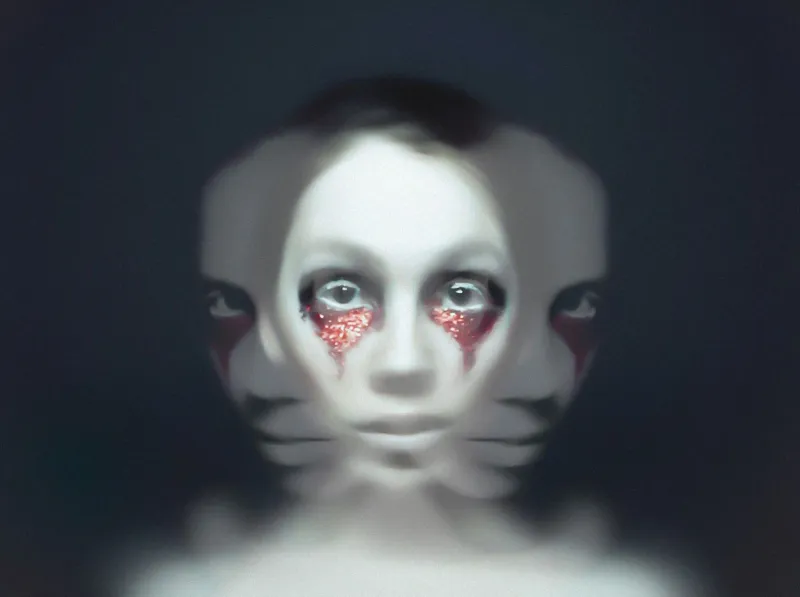
There's a specific flavor of discomfort that lives in your chest when you watch an AI-generated horror clip for the first time. It's not the jump-scare kind. It's not the slow-burn dread of a well-crafted ghost story. It's something older and harder to name — the feeling that the thing looking back at you from the screen does not understand what it has made, and that somehow makes it worse.
AI horror is everywhere right now. It's on Reddit threads that rack up a hundred thousand upvotes before breakfast. It's in Discord servers where artists share procedurally generated imagery that gets flagged, removed, and immediately re-shared somewhere else. It's in short films that blur the line between deepfake technology and genuine craft, racking up millions of views on platforms that aren't quite sure whether to celebrate or suppress them. Whatever this genre is — and it's still figuring itself out — it has arrived, and it brought something genuinely new to the table.
The Uncanny Valley Just Got a Lot Deeper
You've heard the term. The uncanny valley is that psychological dip where something looks almost human but not quite, and your brain reacts with revulsion instead of recognition. It's why early CGI faces in movies felt creepy. It's why certain dolls make people want to leave the room.
AI-generated horror has taken that concept and detonated it. The images and video clips coming out of tools like Midjourney, Stable Diffusion, Sora, and dozens of lesser-known models don't just live in the uncanny valley — they've built a whole civilization down there. Faces with too many teeth. Hands that multiply when you look at them too long. Hallway geometry that folds back on itself in ways that shouldn't be physically possible but somehow feel architecturally real.
The key distinction between this and traditional horror art is authorship. When a filmmaker builds a practical monster suit or a painter renders a disturbing scene, there's a human intention behind every choice. You might not consciously think about it, but some part of your brain knows a person made this. With AI-generated horror, that signal is missing. The model didn't intend to disturb you. It doesn't know what disturbing means. It just recognized patterns in billions of images and produced something that statistically resembles what you asked for — and the gap between that process and genuine creative intent is where the real horror lives.
The Creators Weaponizing the Glitch
Not everyone stumbling into AI horror is doing it by accident. There's a growing community of artists, filmmakers, and outright provocateurs who are deliberately exploiting the weird seams and failures of machine learning to craft something intentional out of the chaos.
Take the wave of deepfake horror shorts that started circulating around 2022 and haven't stopped since. Some of them are crude — a celebrity's face grafted onto something monstrous, shock value with minimal craft. But others are genuinely sophisticated pieces of work. Creators are using AI not as a replacement for filmmaking but as a texture, layering machine-generated imagery over practical footage to produce a visual language that feels like it came from somewhere no human has ever been.
One approach that keeps appearing: using AI to generate environments rather than characters. Locations that look like somewhere you've been but can't quite place. A childhood bedroom with the proportions slightly off. A school hallway that stretches three feet too long. These spaces bypass your critical mind and go straight for procedural memory — the part of your brain that knows this place, except it doesn't, and something is very wrong.
Communities on platforms like Reddit's r/MediaSynthesis and various AI art Discord servers have become informal laboratories for this kind of experimentation. The work gets shared, critiqued, refined, and occasionally pulled by moderators who aren't sure how to categorize it. That friction is part of the appeal. AI horror exists in a regulatory gray zone, which gives it an underground credibility that slick studio productions can't buy.
What We're Actually Afraid Of
Here's the part that gets interesting when you pull back from the individual images and clips and look at the phenomenon as a whole: AI horror is working because it's a mirror.
We are genuinely, collectively afraid of artificial intelligence. Not in a campy Terminator way — most people aren't lying awake worrying about robot uprisings. The fear is subtler and more pervasive. It's the fear of being replaced, misunderstood, or processed by something that sees you only as data. It's the fear of a world increasingly shaped by systems that have no interiority, no empathy, no stake in human flourishing.
AI-generated horror externalizes that anxiety and gives it a face — or rather, a face with too many eyes and teeth in the wrong places. When you watch a deepfake horror short and feel that specific wrongness in your chest, you're not just reacting to the imagery. You're reacting to what the imagery represents: a world where the line between authentic and artificial has dissolved, and you can no longer trust your own perception to tell the difference.
That's genuinely frightening. And great horror has always found a way to bottle genuine fear and sell it back to us in a form we can metabolize.
Where It Goes From Here
The tools are getting better fast. The AI video generators that produced jittery, five-second nightmare clips two years ago are now producing coherent short films. The gap between AI-assisted horror and fully AI-generated horror is closing at a pace that would have seemed absurd to predict even in 2022.
What that means for the genre is an open question. Some creators worry that as the technology improves, the uncanny quality that makes AI horror distinctive will disappear — that the glitch will be optimized out of existence, leaving behind just another filmmaking tool. Others think the opposite: that as AI gets better at simulating reality, the horror potential only deepens, because the wrongness becomes harder to identify and therefore harder to dismiss.
Either way, the machines have learned to scare us. They didn't mean to. They don't know they did it. And somehow, that's the most unsettling thing of all.
Blood Cube will keep watching. We suggest you do too — just maybe not right before bed.