Alone in the Dark: How Horror Learned to Weaponize the Void Inside You
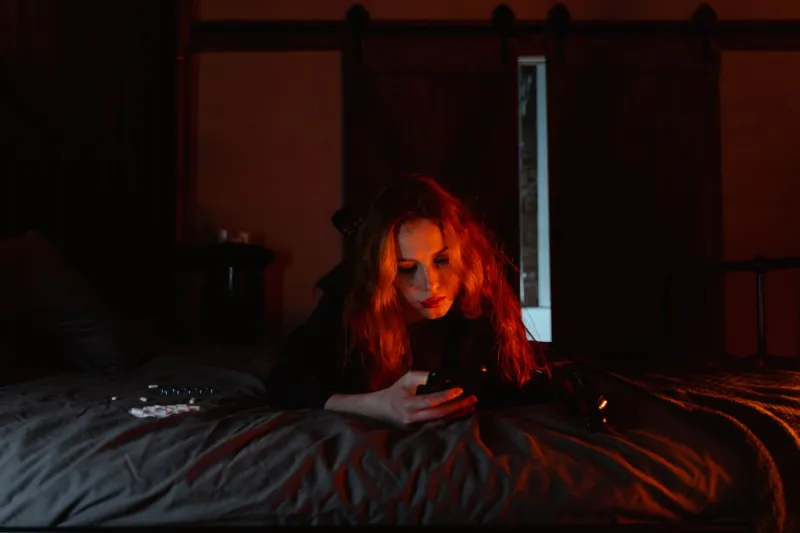
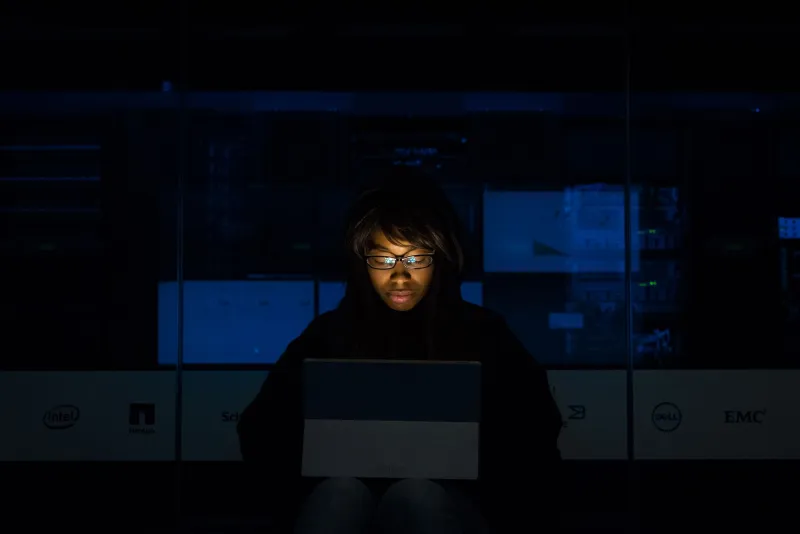
Forget the monster under the bed. The scariest thing in modern horror isn't lurking in a shadow — it's sitting right next to you at 2am while you scroll through a dead phone feed. Contemporary horror has quietly pivoted from external threats to something far more intimate and far more devastating: the creeping terror of being truly, utterly alone.
And audiences are eating it up, because it hits way too close to home.
The Monster That Looks Like Your Empty Apartment
For most of horror's history, the fear engine ran on external fuel. Slashers. Demons. Things with too many teeth crawling out of places they shouldn't be. The threat was always out there — something you could theoretically run from, fight back against, or at least scream about while your friends watched.
But something shifted. Slowly at first, then all at once.
Look at the horror landscape over the past decade and a pattern emerges that's hard to ignore. Films like The Witch, Hereditary, and Saint Maud aren't really about supernatural forces — they're about characters who have become so profoundly severed from meaningful human connection that they've essentially hollowed themselves out. The supernatural is almost incidental. It's the isolation that does the real damage. Games like Soma and Observation trap players inside digital environments where the existential horror isn't the monsters — it's the dawning realization that no one is coming. Literature from authors like Paul Tremblay and Carmen Maria Machado keeps returning to protagonists who are frightened less by what they see than by the silence where other people used to be.
This isn't coincidence. This is horror doing what it's always done best: holding up a mirror.
The Science of Why Empty Rooms Terrify Us
Dr. Julianne Holt-Lunstad, a psychologist at Brigham Young University whose research on loneliness has been widely cited by public health organizations, has described social isolation as a risk factor comparable to smoking 15 cigarettes a day. That's not metaphor. That's biology. Humans are wired for connection at a neurological level — we have entire brain systems dedicated to social processing — and when those systems go unfed, something starts to break down.
Horror writers and directors, whether they know it consciously or not, are tapping directly into that circuit.
"The brain doesn't really distinguish between physical danger and social threat in the way we assume it does," says Dr. Margee Kerr, a sociologist who studies fear and has consulted on haunted house attractions. "Isolation activates the same stress response systems as a predator. So when a horror film puts a character in genuine social isolation — not just physical isolation, but the kind where they feel unseen, unheard, disconnected from anyone who could validate their reality — audiences respond viscerally because their nervous systems recognize that as a genuine survival threat."
Which explains a lot about why the horror that's landing hardest right now feels so different from the stuff that scared previous generations.
Digital Disconnection as the New Haunted House
There's a specific flavor of modern horror that's emerged around technology — not in the old "evil AI" sense, but something more nuanced and way more unsettling. It's the horror of being surrounded by connection and still feeling completely alone.
Mike Flanagan's work keeps circling this drain. The Haunting of Hill House is ostensibly a ghost story, but strip away the spectral imagery and what you've got is a portrait of a family that has become structurally incapable of reaching each other. The ghosts are almost sympathetic. The real horror is watching people who love each other talk past each other for decades.
In the gaming space, Devotion — the Taiwanese horror game that became infamous for entirely different reasons — worked its most effective scares through the depiction of a family that technology and ambition had quietly hollowed out before anything supernatural showed up. Players consistently report that the empty apartment, the cold domestic architecture, the sense of a life that once had warmth and now doesn't, hits harder than any jump scare.
And then there's the emerging subgenre of "found footage loneliness horror" — films and web series that use the language of social media and digital documentation to explore what happens when the performance of connection replaces actual connection. Deadstream, V/H/S/99, and a dozen indie shorts circulating on horror-specific platforms are all, at their core, about people whose relationship with their screens has replaced their relationship with reality.
The Epidemic Behind the Fiction
Here's the uncomfortable part: this isn't just artistic trend-spotting. The US Surgeon General issued an advisory in 2023 declaring loneliness a public health epidemic. Roughly half of American adults report measurable levels of loneliness. The number is higher among young adults — the exact demographic that consumes the most horror content.
So when a 24-year-old in Columbus or Portland or Houston sits down to watch something that makes them feel genuinely scared, and what scares them most is a character staring at their phone in an empty apartment while the walls close in — that's not just entertainment. That's recognition.
Horror has always been at its most powerful when it externalizes internal terror. We made monsters out of our fear of disease, our fear of the other, our fear of sexuality and death and loss of control. The monster was always a costume that fear wore so we could look at it directly.
Loneliness is just the latest thing that needed a costume.
Where This Goes Next
The really interesting question isn't why horror latched onto isolation — that's pretty obvious in retrospect. The interesting question is where the genre takes it from here.
Because here's the thing about loneliness as a horror trope: it doesn't have a satisfying kill shot. You can't stab it. You can't burn the house down and drive away. The most honest horror about isolation tends to end ambiguously or badly, because the real-world version of this fear doesn't resolve cleanly either.
That ambiguity is going to push horror into increasingly uncomfortable territory. Expect more films that refuse catharsis. More games that leave players genuinely unsettled rather than relieved. More fiction that implicates the audience in the isolation it depicts — because you're reading this alone, aren't you? Or watching it alone. Or consuming it in the particular solitary way that modern life has trained all of us to consume everything.
The void isn't in the story. It's been in the room with you the whole time.
Welcome to the new horror. It already knows your name.