Skin Deep Isn't Deep Enough: Meet the Underground Artists Turning Their Bodies Into Living Horror
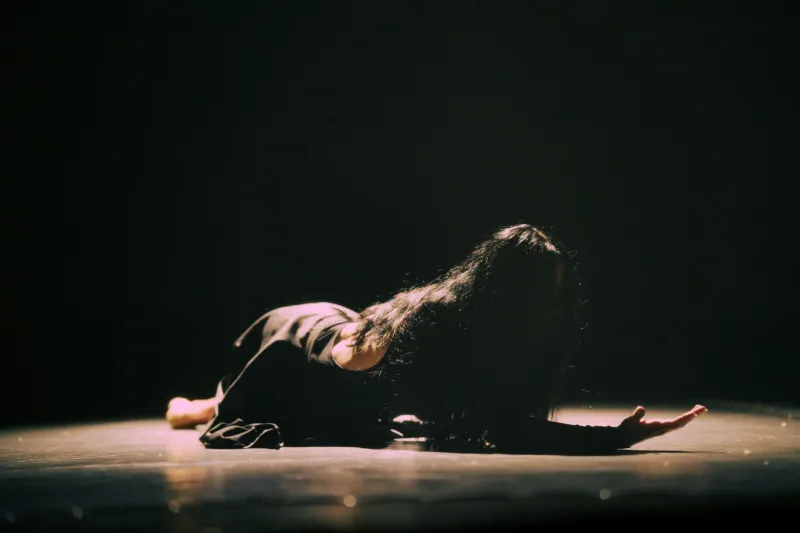
There's a moment, if you spend enough time in certain corners of the American underground art scene, where the boundary between performance and body horror stops being a boundary at all. You're watching someone on a makeshift stage in a converted warehouse somewhere outside of Chicago or Austin or Portland, and the thing happening in front of you doesn't have a clean category. It's not a sideshow. It's not surgery. It's not quite theater. It's something that lives in the space between all three — and it's growing.
Body modification as art isn't new. Humans have been tattooing, piercing, and scarifying themselves for thousands of years across cultures that mainstream Western society spent centuries dismissing as primitive. But what's happening in America's underground scenes right now feels different. More deliberate. More confrontational. More explicitly designed to make you feel something uncomfortable in your chest.
The Body as the Canvas, the Knife as the Brush
When you talk to practitioners in this world — and it takes a while to get them talking, because most have been burned by sensationalist media before — a consistent philosophy starts to emerge. The body isn't just a vehicle for the art. It is the art. Every implant, every raised scar, every surgical alteration is a permanent statement that can't be hung in a gallery and sold to a collector. It belongs to the person who made it, literally and permanently.
Take the work being done in the body suspension community, where performers hang from hooks pierced through their skin in rituals that trace roots back to Indigenous practices the O-Kee-Pa ceremony of the Mandan people being one of the most documented examples. Contemporary performers in cities like Los Angeles and New York have taken that foundation and pushed it into explicitly theatrical territory. They're not just suspending. They're telling stories with their bodies under tension, creating living tableaux that are equal parts agony and transcendence.
Scarification artists working in underground studios across the South and Midwest describe their work in similar terms. The process of cutting or burning patterns into skin, watching them heal into raised keloid designs, is framed not as self-harm but as authorship. You are writing something permanent onto yourself that no one else can erase.
Why Mainstream America Can't Look Away
Here's the uncomfortable truth that nobody in the mainstream conversation about body modification wants to sit with: people are fascinated by this stuff. Not just the niche community of practitioners and their audiences, but regular people who stumble across it on social media or hear about it from a friend and spend the next hour falling down a research rabbit hole they didn't plan on.
The psychology behind that fascination isn't complicated, even if it's uncomfortable to admit. Horror has always operated on the principle that the things we find most repulsive are often the things we can't stop thinking about. Body horror as a film genre — think Cronenberg, think early effects-heavy splatter cinema — works because it exploits our deep-seated anxiety about the integrity of our own flesh. These underground artists are doing something similar, except it's real. The skin is actually being cut. The implant is actually under there. That realness is the entire point.
It creates a kind of cognitive dissonance in viewers that's genuinely hard to shake. You know you're supposed to be disturbed. Part of you absolutely is. But another part of you is watching something that requires extraordinary commitment, pain tolerance, and artistic vision, and that part recognizes it as exactly what it is: a legitimate creative act.
The Line Between Transgression and Exploitation
Not everyone in the body modification community is comfortable with the performance art framing, and those conversations are worth having honestly. There's a real tension between practitioners who see their work as deeply personal and private — a spiritual or psychological practice that has nothing to do with an audience — and those who are deliberately staging it for public consumption.
There's also a legitimate critique about who gets to transgress safely. When a white artist in a major metropolitan area gets written up in an art magazine for their scarification work, that's a very different cultural conversation than the one happening when communities of color engage in similar practices and face stigma or legal scrutiny. The underground art world isn't immune to the same inequities that show up everywhere else.
And then there's the question of harm. Reputable body modification artists — and there are many — work with sterile equipment, proper aftercare protocols, and informed clients who understand exactly what they're agreeing to. But the underground nature of some of this work means it also attracts practitioners who don't have that training, working on people who may be in vulnerable states. The line between transgressive art and genuine exploitation of vulnerable individuals is one that the community itself argues about constantly.
What They're Actually Making
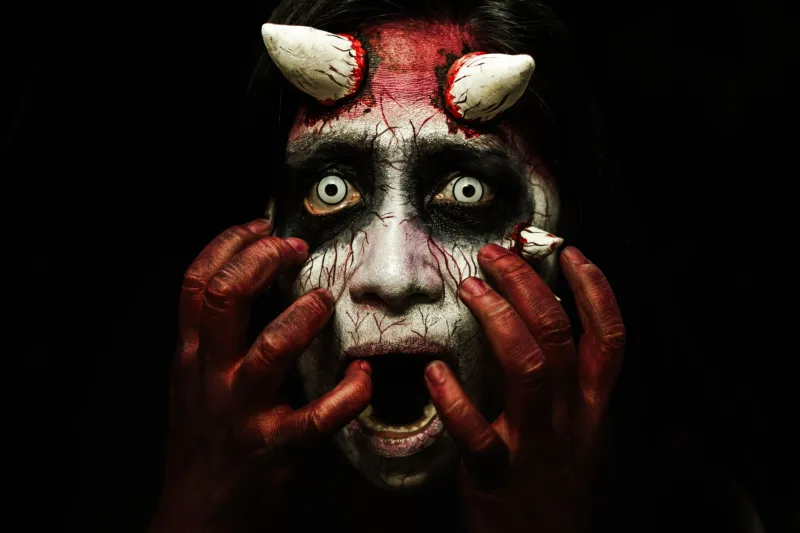
Set aside the discomfort for a second and look at what some of these artists are actually producing, because it's genuinely striking. Implant artists creating subdermal shapes that make the body look like it's transforming into something nonhuman — horns, ridges, geometric forms pushing up from under the skin. Tongue bifurcation paired with extensive facial tattooing that creates a coherent visual identity as alien and deliberate as any costume. Suspension performers whose rigging is choreographed with the same attention to spatial composition as contemporary dance.
There are artists working in this space whose bodies, taken as complete works, represent years of incremental creative decisions building toward something cohesive. It's not chaos. It's not impulsive. It's a long-form art project that happens to be made of living tissue.
Whether that makes you deeply uncomfortable or deeply impressed probably says something about where your own relationship with the body sits. And maybe that's the most honest thing you can say about this whole world: it holds up a mirror, and the mirror has teeth.
The Underground Isn't Going Anywhere
Mainstream culture has a funny relationship with transgressive art. It tends to absorb it, sand off the edges, and sell it back at a markup. You can see the aesthetic of extreme body modification filtered through fashion editorials, horror makeup trends, and Halloween costumes already. The imagery leaks out even when the reality stays underground.
But the actual practitioners, the people doing the real work in warehouses and underground studios and late-night performance spaces, aren't particularly interested in being absorbed. The whole point is to exist outside the frame. To make something that the mainstream can't quite hold in its hands without flinching.
That's not going to stop. If anything, in a cultural moment where everything feels mediated and filtered and algorithmically smoothed, the appetite for something genuinely raw and irreducible is only growing. The underground artists turning their bodies into living horror aren't fringe curiosities. They're responding to something real.
And if it makes you uncomfortable, well. That's kind of the whole idea.