You Paid Someone to Terrorize You. Here's What's Actually Happening in Your Brain.
Let's start with a number that should probably raise some eyebrows: Americans spend somewhere north of $300 million every year on haunted attractions. That's not counting Halloween merchandise or horror movies or escape rooms. That's specifically the haunted house industry — corn mazes with chainsaws, warehouse walk-throughs staffed by actors in latex, and at the extreme end, ticketed experiences that will make grown adults cry and occasionally request to be escorted out early.
The business of fear is booming, and nobody seems entirely sure why. But the answer is out there, split between neuroscience labs and the converted barns and industrial spaces where operators are engineering dread for paying customers every fall.
What's Actually a "Haunted House" in 2024
The term covers a lot of ground these days, and it's worth mapping the territory before going deeper. At one end you've got the classic community haunted house — church fundraisers, high school drama department productions, the kind of thing where the scariest moment is probably tripping over a fog machine cord. Totally fine. Not what we're talking about.
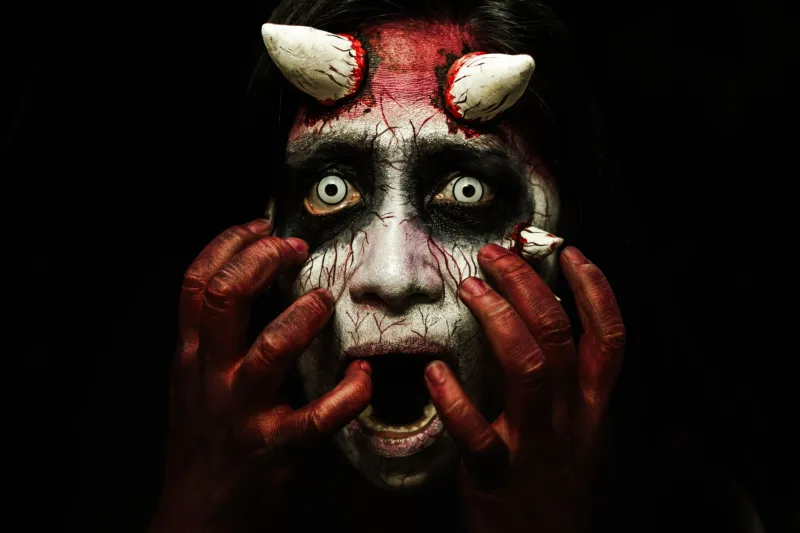
Then there are the professional large-scale attractions, places like Knott's Scary Farm in California, Halloween Horror Nights at Universal, or the hundreds of independently operated haunts that run out of warehouses and fairgrounds across the country every October. These are polished, safety-regulated, and designed to deliver reliable scares to thousands of visitors a night.
And then, at the far end of the spectrum, there are the extreme haunts. Places like McKamey Manor, which operates out of locations in Tennessee and Alabama and requires participants to sign a waiver that runs to multiple pages. Experiences that are specifically designed to push past entertainment and into something that feels genuinely threatening. These are the ones that end up on true crime podcasts and generate arguments about consent and psychological safety, and they're also the ones that have year-long waitlists.
Your Brain on Terror: The Chemistry Breakdown
Here's the thing about fear that makes haunted houses work: your nervous system is not great at distinguishing between a threat that's real and one that's staged. When an actor in a monster mask lunges at you in a dark corridor, your amygdala — the part of your brain that handles threat detection — fires like you're actually in danger. Your heart rate spikes. Adrenaline and cortisol flood your system. Your body primes itself to run or fight.
All of that happens before your prefrontal cortex — the part that handles rational thought — has time to process the situation and remind you that you're in a warehouse in suburban Ohio and you paid forty bucks for this.
And here's where it gets interesting: once that rational processing kicks in and your brain registers safety, the neurochemical cocktail doesn't just disappear. The adrenaline is still there. So is a surge of dopamine, which your brain releases partly in response to successfully navigating a perceived threat. Add in endorphins, which your body produces partly as a response to stress, and you've got a physiological state that feels genuinely good. Not just relieved. Actually good.
It's the same basic mechanism behind roller coasters, extreme sports, and the inexplicable appeal of extra-spicy food. Your body responds to the stress, your brain resolves the threat as safe, and you get a reward hit for surviving something your nervous system briefly thought was going to kill you.
The Operators Building Dread Professionally
The people running serious haunted attractions talk about their work with a level of craft and intentionality that would feel at home in any other design conversation. Lighting, sound design, spatial progression, actor direction, pacing — it's all deliberate. The goal isn't just to make you jump. Jumps are easy. The goal is to build a sustained state of unease that makes the jumps hit harder.
Good haunted house design works in layers. There's the surface layer — the costumes, the props, the actors. Underneath that is the environmental design: the way a hallway narrows, the way a room smells, the quality of sound that tells your nervous system something is wrong before your eyes have confirmed it. And underneath that is timing. The best haunts understand that what you imagine in the dark is almost always scarier than what they can actually show you, so they show you just enough and let your brain do the rest.
Extreme haunt operators add another layer entirely: personalization. McKamey Manor is notorious for researching participants in advance and incorporating personal information into the experience. That's a significant psychological escalation. A generic monster is one thing. Something that seems to know you is something else entirely.
When Fun Stops Being Fun
The extreme haunt world doesn't get to skip the harder conversation, which is about where consent and psychological safety actually live in these experiences. Most extreme attractions use a safeword system — you say the word, the experience stops immediately, no questions asked. In theory, that's a clean ethical framework. In practice, it's more complicated.
Psychological research on fear and trauma suggests that certain kinds of intense, inescapable-feeling fear experiences can be genuinely destabilizing for people with pre-existing anxiety disorders, PTSD, or trauma histories. The problem is that people don't always know how they'll respond until they're in the middle of it, and the immersive, disorienting design of extreme haunts is specifically built to make you feel like you can't easily leave. That's the point. It's also the risk.
Operators of reputable extreme attractions will tell you that screening participants is part of the process — waivers that ask about mental health history, intake conversations, clear explanations of what participants are agreeing to. Whether that's sufficient is a question the industry is still working through, and it's one worth asking.
Why We Keep Coming Back
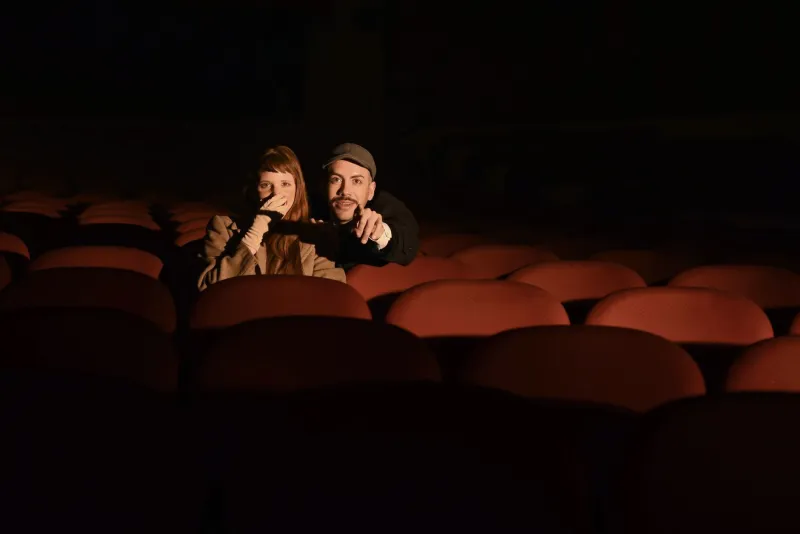
For most people who do haunted attractions, the experience lands exactly where it's supposed to: as entertainment. They come out shaky and laughing, high on their own adrenaline, already texting their friends about the part where the actor dropped from the ceiling. They'll probably go again next year.
What they're buying, when you strip it back, is a controlled environment in which it's safe to feel genuinely unsafe. That's a surprisingly rare thing. Most of life's actual threats don't come with the assurance that you'll be fine, that there's a safeword, that the monster is a 22-year-old theater major named Derek. Haunted houses offer fear with a guarantee attached, and in a world that can feel genuinely chaotic and threatening, there's something almost comforting about that.
You get to practice being scared. You get to practice surviving. And then you get to walk out into the parking lot, find your car, and drive home with your nervous system convinced, on some level, that you just made it through something real.
For $40, that's a pretty good deal.