From Bootleg Tapes to Browser Tabs: The Dirty, Glorious History of Internet Horror
Let's start somewhere uncomfortable: the first piece of horror content that genuinely wrecked you probably didn't come from a studio. It didn't have a budget, a director's credit, or a marketing campaign. It came from someone you half-knew, or from a message board you stumbled onto at midnight, or from a chain email that landed in your inbox with a subject line that made your stomach drop before you even opened it.
That's not an accident. That's a lineage.
Modern internet horror — the creepypasta, the viral ARG, the unsettling YouTube rabbit hole — didn't emerge from nowhere. It has roots that stretch back through pre-digital folklore, through the weird underground economy of bootleg videotapes, through the early lawless days of online forums where anonymity gave people permission to be genuinely, creatively disturbing. Understanding where it came from makes what it's become even more fascinating.
The Tape That Shouldn't Exist
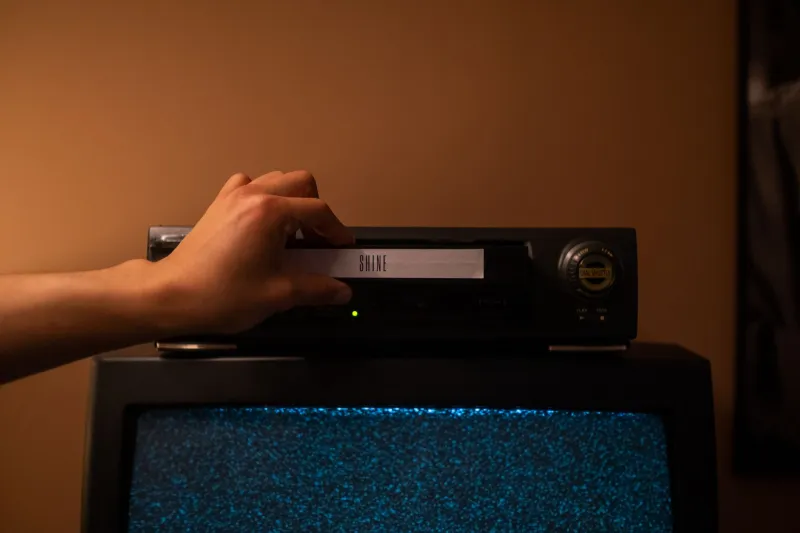
Before the internet was a thing most American households had, horror circulated physically. And one of the most potent delivery mechanisms was the bootleg VHS tape.
The mythology around forbidden tapes — recordings of things that weren't supposed to be seen, footage that passed from hand to hand with whispered warnings — predates The Ring by decades. In the 1970s and 80s, moral panic around "video nasties" in the UK and underground tape trading networks in the US created an entire shadow economy of horror that existed specifically because it was hard to access. The difficulty was part of the terror. You had to earn the disturbing thing. Someone had to trust you enough to copy it for you. That social transaction made the content feel more real, more dangerous, more significant.
Films like Faces of Death — a 1978 pseudo-documentary that mixed real and staged footage of death — circulated for years on bootleg tapes and became a genuine cultural phenomenon despite (or because of) being impossible to find through legitimate channels. Teenagers passed copies around like contraband. The tape itself became the monster: an object that shouldn't exist, containing things you shouldn't see.
Sound familiar? It should. That's the entire structural DNA of a creepypasta.
Urban Legends Go Online
American folklore has always had a dark streak. The vanishing hitchhiker. The hook-handed killer. The babysitter and the man upstairs. These stories circulated orally for generations, evolving slightly with each retelling, drawing power from their claimed authenticity — this happened to a friend of a friend, I swear — and their geographic specificity. The horror felt local. Possible. Adjacent to your actual life.
When the internet arrived and platforms like Usenet, early message boards, and eventually sites like Something Awful and 4chan gave anonymous users a place to share stories, urban legend didn't die. It mutated.
The format adapted to the medium. Text-based horror could be shared instantly, globally, and — critically — anonymously. The author didn't matter. The source didn't matter. What mattered was the story, and whether it felt real enough. Writers discovered that the internet's documentary aesthetic — the clinical forum post, the truncated message thread, the found image — was incredibly effective at creating that feeling.
The term "creepypasta" itself is a corruption of "copypasta" — internet slang for blocks of text copied and pasted across forums. Horror copypasta became creepypasta somewhere around 2007-2009, and the genre exploded on sites like the Creepypasta Wiki and NoSleep, a subreddit founded in 2010 that asked readers to engage with every story as if it were true.
The Architects of Anonymous Dread
The early creepypasta writers were, for the most part, just people on the internet who were good at being scary. No credentials. No agents. No budget. Just a text box and an understanding of what made the back of your neck prickle.
Some of those writers have since become recognizable names in horror circles. The creator of Slender Man — one of the most successful horror characters to emerge from the internet, eventually spawning films, games, and a deeply troubling real-world incident — was a Something Awful forum user named Eric Knudsen, posting under the name Victor Surge, who created the character in 2009 as a Photoshop contest entry. Within months, the character had escaped his control entirely, taken on a life of its own across dozens of forums and collaborative fiction projects.
That collaborative, open-source quality was unique to internet horror. Traditional horror is authored. Internet horror is grown. Slender Man, Smile Dog, The SCP Foundation, Jeff the Killer — these characters and mythologies accrued detail and depth through hundreds of anonymous contributors, each adding to the lore, each making the fictional universe a little more elaborate and a little more convincing.
"The best early creepypasta worked because nobody owned it," says one longtime NoSleep contributor who asked to be identified only by their username. "When a story doesn't have an author, it feels like it came from the walls. Like it was always there and someone just found it."
The Algorithm Changes Everything
Here's where it gets complicated. The era of truly anonymous, truly grassroots internet horror is, in some ways, already behind us.
As platforms matured and content became monetizable, horror creators got identities. YouTube horror channels developed subscriber bases and brand deals. Creepypasta got adapted into podcasts with production values. The SCP Foundation became a legitimate multimedia franchise. What was once a gift economy of shared darkness became, inevitably, a content economy.
The algorithm changed the texture of what got made. Viral horror now gets optimized — for watch time, for engagement, for the specific emotional triggers that keep people clicking. Jump scares got engineered. Thumbnail horror became its own aesthetic. The raw, amateurish quality that made early internet horror feel real got smoothed out, professionalized, and in many cases, defanged.
But the underground didn't disappear. It just went deeper.
Alternate reality games (ARGs) — elaborate, multi-platform horror experiences that blur the line between fiction and reality — have become increasingly sophisticated, with communities of dedicated players hunting for clues across websites, phone numbers, physical mail drops, and encrypted files. The Marble Hornets series, a found-footage YouTube project that ran from 2009 to 2014, is widely credited with pioneering the modern ARG horror format. Its descendants are everywhere now, operating in the spaces between platforms, deliberately difficult to find.
What the Tape Knew That the Algorithm Doesn't
There's a reason the most enduring internet horror still carries traces of that original bootleg-tape energy. The best of it feels found rather than made. It feels like something you weren't supposed to see, passed to you by someone who maybe shouldn't have had it.
The friction mattered. The difficulty of access was part of the horror's power. When you had to work to find the thing, when you had to navigate three forum redirects and a dead link before you got to the actual story, the journey prepared your nervous system. You arrived already primed.
Algorithmic horror delivers the scare to your door. Old internet horror made you come find it in the dark.
Both have their place. But if you want to understand why a particular piece of content gave you nightmares for a week while a hundred polished horror films left no mark at all, look at how you found it. Look at who handed it to you. Look at whether it felt like entertainment or like a warning.
The best darkness always felt like the latter.