Scared Straight: Why Terrified Is the New Calm for a Generation Running on Empty
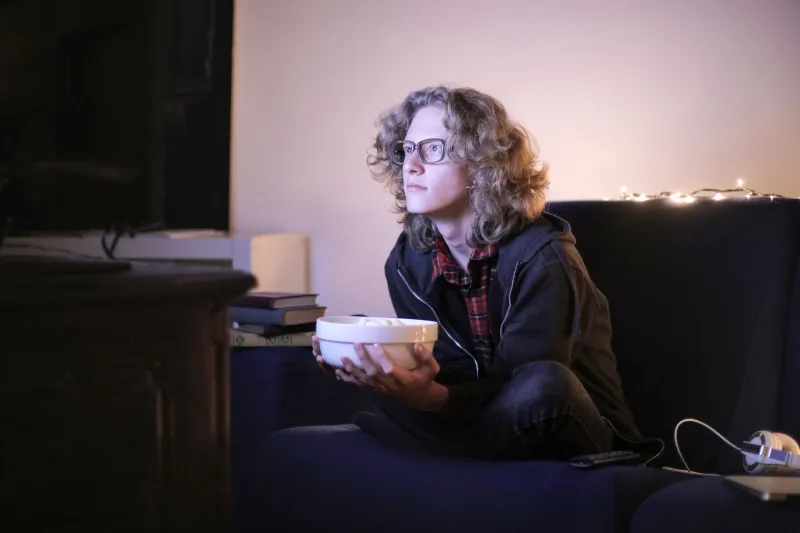
Somewhere between a global pandemic, a collapsing housing market, and the ambient hum of climate catastrophe, a weird thing happened: people stopped running from scary movies and started running toward them.
Streaming data doesn't lie. Horror has quietly become one of the most-consumed genres among adults under 40 in the US, with platforms reporting sustained spikes in horror viewership that outlasted the pandemic bump and kept climbing. Reddit threads devoted to horror recommendations overflow daily. TikTok's horror community — BookTok's darker, weirder cousin — has millions of followers dissecting everything from classic slashers to obscure indie folk horror. And if you've spent any time on horror forums lately, you've probably noticed something: these aren't people who seem desensitized or broken. A lot of them seem genuinely... fine. Better than fine, actually.
So what gives? Why is a generation already swimming in existential dread choosing to pile more darkness on top?
The Paradox Nobody's Talking About
Here's the thing about real anxiety — the kind that comes from student loan debt or watching your savings evaporate or doom-scrolling through geopolitical collapse — it's shapeless. It doesn't have a face. It doesn't have a resolution. It just sits there, pressing down on your chest at 2 a.m. while you stare at the ceiling.
Horror gives that feeling a body.
Dr. Margot Hensley, a licensed clinical psychologist based in Chicago who works with young adults, puts it this way: "There's a concept in exposure therapy where we deliberately introduce the thing that causes anxiety in a controlled way. Horror functions similarly for a lot of people — unconsciously, intuitively. The threat is contained. You know there's a beginning, middle, and end. You get to feel the fear and then survive it."
That survival element is key. When the credits roll or you close the book, your nervous system has just run a full stress drill — heart rate up, adrenaline spiked, threat response activated — and then been told: you made it. For people who feel like they're losing control of their actual lives, that's not a small thing. That's a rehearsal for resilience.
"I Watch Horror When I'm Overwhelmed. It's the Only Thing That Quiets My Brain."
Talk to enough horror fans in their 20s and 30s and a pattern emerges fast. These aren't thrill-seekers chasing an adrenaline high the way someone might go skydiving. They're people reaching for horror the way someone else might reach for a glass of wine or a long run — as a deliberate act of emotional regulation.
Jamie, a 28-year-old graphic designer in Austin, describes a ritual that's become a near-nightly habit: "I put on something genuinely disturbing — not jump scare garbage, but something that gets under your skin — and by the time it's over, whatever I was anxious about before feels smaller. Like my brain recalibrated what 'bad' actually means."
That recalibration has a name in psychological circles: affect labeling, combined with what researchers sometimes call the "excitation transfer" effect. Your body produces arousal chemicals in response to the horror content. When the threat passes, those same chemicals get reinterpreted as relief, even pleasure. You've essentially tricked your nervous system into a reset.
Kayla, 31, a nurse in Philadelphia, frames it differently: "Real life is scary and I can't turn it off. Horror is scary and I can. That control is everything."
The Creators Who Figured This Out First
It's no accident that the horror content resonating hardest with younger audiences right now leans into themes of systemic dread, isolation, and powerlessness. Films like Hereditary, Midsommar, and The Witch weren't just critically acclaimed — they became cultural touchstones for a generation that recognized something true in them. The monster isn't always a guy in a mask. Sometimes it's grief, or manipulation, or a community that slowly closes in around you.
Independent horror creators have been even more explicit about the connection. Podcast horror, in particular, has exploded precisely because it meets anxious listeners where they already are — in their earbuds, during a commute, in the dark before sleep. Shows built around intimate, slow-burn dread have found massive audiences not despite their unsettling nature but because of it.
"I think people are drawn to horror that reflects their actual emotional landscape," says Marcus Webb, who produces an indie horror fiction podcast out of Portland. "If you feel like the world is unpredictable and threatening and sometimes incomprehensible, a horror story that captures that feeling isn't escapism — it's recognition. And recognition is comforting, even when the content is dark."
But Is This Actually Healthy?
Fair question. And the honest answer is: it depends, and therapists aren't entirely in agreement.
Dr. Hensley is cautiously optimistic. "For most people, consuming dark entertainment is a completely valid coping strategy. It externalizes internal states, provides narrative structure, and can build a genuine sense of mastery over fear." But she adds a caveat: "When someone is using horror — or any media — to avoid processing real trauma rather than metabolize fear in a healthy way, that's worth examining. There's a difference between using darkness as a tool and hiding inside it."
The distinction matters. Horror as catharsis is ancient — Aristotle was writing about it 2,400 years ago in the context of Greek tragedy. Horror as avoidance is something else. And in a generation with historically high rates of anxiety, depression, and trauma, those lines can blur.
Still, for the majority of the horror-obsessed young adults you'll find on any given Blood Cube forum thread or horror Discord server, the consumption looks less like pathology and more like community. People sharing recommendations, dissecting themes, processing fears together. That's not hiding. That's connection.
Darkness as a Love Language
Maybe the most telling sign that horror has become something genuinely meaningful for younger audiences is how social it's gotten. Horror watch parties. Horror book clubs. Horror conventions that sell out months in advance. The genre has become a gathering point for people who communicate in darkness — who bond over shared fears and find solidarity in the acknowledgment that the world is, in fact, pretty terrifying right now.
There's something Blood Cube has always understood: darkness isn't the opposite of comfort. Sometimes it is the comfort. Sometimes the most honest thing you can offer an anxious person isn't reassurance that everything is fine — it's a story that says yeah, it's bad, and here's what that looks like, and you're still here at the end of it.
For a generation that grew up being told everything would be okay and watched that promise fall apart in real time, horror might be the only genre telling the truth.
And the truth, apparently, is exactly what they came for.