Shrines to the Sinister: Inside the Private Horror Collections Turning American Homes Into Sanctuaries of Dread
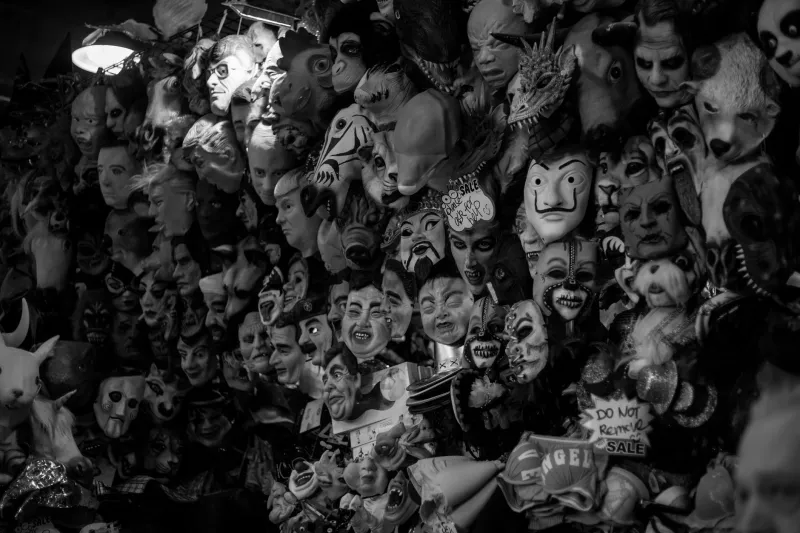
Walk into Renata Voss's apartment in Portland, Oregon, and the first thing you notice is the smell — cedar and something faintly chemical, like a prop house after hours. The second thing you notice is the wall. Floor to ceiling, it's covered: original one-sheets from 1970s Italian giallo films, a mounted display of vintage Halloween masks still wearing their original box inserts, a small shelf dedicated entirely to what she calls her "medical curiosities" — antique surgical tools, a preserved specimen jar she won't identify, and a hand-painted portrait of a woman whose eyes follow you across the room.
Renata is thirty-four, works in UX design, and has been building this collection for eleven years. She's not unusual anymore. Not even close.
The Collector Is Not Who You Think
Forget the stereotype of the damp basement and the guy in a trench coat. The people quietly assembling personal horror museums in 2024 look like your coworkers, your neighbors, the woman ahead of you at Whole Foods. They're teachers, nurses, software developers, and stay-at-home parents. They haunt estate sales, scour eBay at 2 a.m., and maintain relationships with specialty dealers who traffic in original prop pieces, outsider gore art, and artifacts with genuinely disturbing provenance.
The market has responded accordingly. Horror memorabilia auctions have seen year-over-year price increases that rival mid-tier fine art. Original lobby cards from classic Universal monster films now regularly hit five figures. A screen-used mask from a recognizable slasher franchise can clear six. The Horror Collector community on Reddit has over 400,000 members. Facebook groups dedicated to specific niches — haunted attraction props, death-related Victorian mourning jewelry, exploitation film ephemera — run into the tens of thousands.
This isn't a fringe hobby quietly ticking along. It's a full-blown cultural movement, and it's building altars in spare rooms all over America.
What Ownership Does to Fear
There's a specific psychological mechanic at work here that's worth sitting with. Fear, in its natural state, is involuntary. Something comes at you — a sound, an image, a situation — and your nervous system fires before your brain has a chance to weigh in. That's the whole point. Fear is a system designed to bypass your control.
Collecting horror objects inverts that entirely.
When you own the thing, you decide where it lives. You decide who sees it, when, under what lighting, in what context. You can put it in a box. You can take it out again. The skull on your shelf is not going to do anything you haven't already allowed it to do. The power dynamic — which in genuine fear always runs against you — flips completely.
Dr. Margot Ellison, a clinical psychologist who has written about dark aesthetics and anxiety management, describes it as a form of "exposure architecture." "There's a reason exposure therapy works for phobias," she explains. "Controlled, repeated contact with the thing that frightens you, in a context where you feel safe, gradually rewires the threat response. Collectors are essentially doing a version of this continuously, by choice, in their own homes."
For Renata, it's less clinical than that. "When I'm anxious — actually anxious, about real things, work stress or whatever — I come in here and I feel calmer," she says, gesturing at the wall. "I think it's because everything in here is a fear I've already handled. I found it, I bought it, I decided where it goes. My actual anxiety doesn't get that treatment. But this room has."
The Aesthetics of Dread as Interior Design
Not every collector is running a therapeutic experiment. Some are just deeply, genuinely in love with the visual language of horror — and they want to live inside it.
Marcus Delray, a high school art teacher in Atlanta, has spent fifteen years building what he describes as "a maximalist dark cabinet." His collection skews toward outsider art and self-taught painters who work in what he calls "uncomfortable subject matter" — pieces depicting violence, decomposition, figures in states of distress. He also collects antique medical and mortuary equipment, framed Victorian post-mortem photography, and hand-crafted dioramas from underground artists he's found through horror conventions.
"People come over and they either get it immediately or they never will," he says. "The ones who get it — they relax in here. Something about being surrounded by all of it is actually really peaceful. It's honest. It's not pretending death doesn't exist, or that dark things don't happen."
That honesty is something collectors return to again and again. There's a sense that mainstream American interior aesthetics — the beige, the shiplap, the aggressively neutral — perform a kind of cultural denial. Horror collections, by contrast, insist on acknowledging the full texture of existence. They're a refusal to look away dressed up as home décor.
When Darkness Has Provenance
Some collections go further than aesthetics. A subset of serious collectors actively seeks objects with what the community calls "dark provenance" — items with documented connections to actual disturbing history. Antiques from defunct asylums. Artifacts connected to historical crimes. Objects owned by notorious figures.
This is where the conversation gets complicated, and collectors know it. Most are careful to articulate why they collect these things — historical preservation, a refusal to sanitize difficult history, the same impulse that drives people to visit battlefields or Holocaust museums. Others are more honest about the frisson of proximity to genuine darkness, the way owning something with a troubling history adds a layer of weight that a reproduction simply can't replicate.
"There's no clean answer," admits one collector who asked to remain anonymous. "I own some things that have stories I think about a lot. I don't know that I've fully worked out what that means about me. I don't think I'm supposed to have fully worked it out."
The Collection as Self-Portrait
Maybe that's the most honest thing about all of this. These collections are, at their core, deeply personal documents. They map what their owners have been afraid of, what they've been drawn to, what they've needed to process and what they've chosen to live alongside. Walk through someone's horror museum and you're reading a biography written in severed hands and shadow boxes.
Renata pulls out a piece she keeps in a drawer rather than on display — a small oil painting, unsigned, that she found at an estate sale in rural Washington. It depicts a figure standing at the end of a long hallway, face obscured, posture suggesting something she can't quite name. "This one still gets me," she admits. "I've had it for three years and it still gets me every time I look at it."
She puts it back in the drawer.
"That's why I keep it," she says. "Everything else out there — I've made my peace with it. This one, I'm still working on."
The collection grows. The work continues. That's kind of the whole point.