Someone Is Wearing Your Face and There's Nothing You Can Do About It
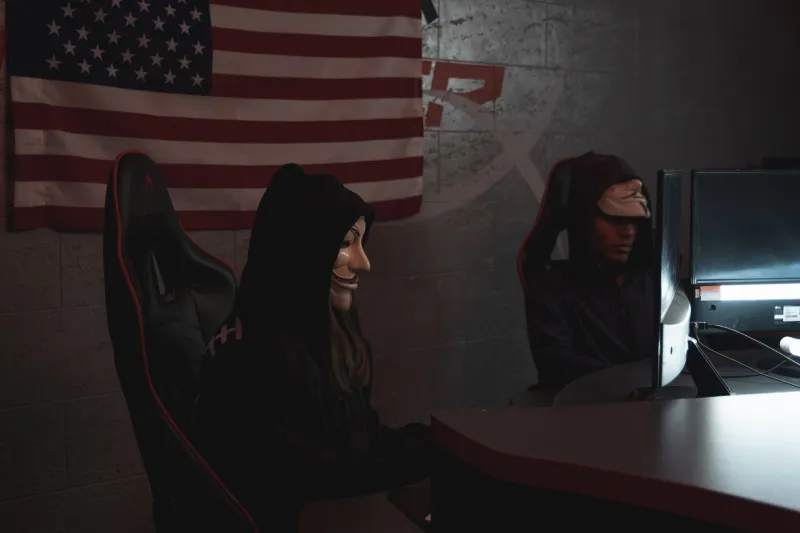
Imagine scrolling through your phone on a Tuesday afternoon and finding a video of yourself doing something you never did. Not a bad photo. Not a screenshot taken out of context. A video — fluid, convincing, with your face mapped onto someone else's body with surgical precision — circulating across platforms you barely use, sent to people you actually know.
This is not a hypothetical. It is happening right now, to real people, in numbers that researchers describe as "staggering" and law enforcement describes as "nearly impossible to address at scale." Welcome to the deepfake era, where identity theft got a body.
The Technology Grew Up While Nobody Was Watching
For most of its early life, deepfake technology lived in the realm of Hollywood spectacle — de-aging movie stars, resurrecting dead actors, swapping faces in prestige productions with budgets in the millions. It felt distant. Controlled. Something that required warehouses full of servers and teams of engineers.
That version of events is now embarrassingly outdated.
The computational cost of generating a convincing synthetic face has collapsed. Consumer-grade apps — some of them free, some of them available in your phone's app store right now — can produce footage that fools casual viewers in under an hour, using nothing more than a handful of publicly available photographs. Social media profiles. LinkedIn headshots. A tagged photo from someone's birthday party three years ago.
Security researchers who track this space use a word that keeps coming up: democratized. The tools that once required institutional resources are now available to anyone with a grudge, an obsession, or just a bad afternoon and too much time on their hands.
Your Public Image Is Raw Material
Here's the part that tends to make people genuinely uncomfortable when they hear it for the first time: you have almost certainly already provided everything a bad actor needs.
Every photo you've tagged yourself in. Every video you've posted. Every profile picture across every platform you've half-forgotten you joined. These are not just memories. They are training data. They are the raw material from which a synthetic version of you can be constructed — a version that will smile when told to, say what it's instructed to say, and appear in contexts you would never consent to in a thousand lifetimes.
The majority of deepfake content created targeting private individuals falls into one category: non-consensual intimate imagery. The statistics are grim. One analysis from 2023 found that over 95% of deepfake videos online were non-consensual pornography, and the overwhelming majority of targets were women. But the technology does not discriminate by gender when it comes to other applications — financial fraud, reputational destruction, political manipulation, or simple, targeted harassment.
The Moment It Becomes Personal Horror
There's a particular psychological phenomenon that victims consistently describe, and it doesn't have a clean clinical name yet. It sits somewhere between dissociation and violation — the sensation of watching something that looks exactly like you, moves like you, but is doing something that is categorically not you.
Psychologists who work with deepfake victims describe it as a kind of identity fracture. Your brain is wired to recognize your own face as a signal of self. When that signal gets hijacked and attached to experiences you didn't have, the cognitive dissonance is profound. It's not just embarrassing. It's destabilizing in a way that other forms of image-based abuse aren't quite, because the object of violation is the thing you use to navigate the world — your face.
Victims report difficulty looking at photos of themselves afterward. Some describe an aversion to mirrors. Others talk about feeling like a copy of themselves is loose in the world, making choices they can't control, and that the real version of them — the one with actual agency — has somehow become the less real of the two.
Platforms, Legislation, and the Gap Between Them
If you're waiting for the legal system to ride to the rescue here, you're going to be waiting for a while.
As of now, federal law in the United States does not comprehensively criminalize the creation or distribution of non-consensual deepfake content. A patchwork of state laws exists — some states have passed legislation specifically targeting deepfake pornography, others have broader image-based abuse statutes that attorneys have argued apply — but enforcement is inconsistent, jurisdiction gets murky fast when content crosses state or national lines, and the technical anonymity available to bad actors makes prosecution genuinely difficult.
Platforms have policies. They also have billions of pieces of content and moderation systems that are already buckling under the existing load. Deepfake detection tools exist, but they are engaged in a perpetual arms race with generation tools, and generation is currently winning.
The gap between what the technology can do and what the legal and social infrastructure can address is enormous. Advocates who work with victims describe it as a crisis in slow motion — visible to anyone paying attention, and moving faster than the institutions designed to respond to it.
The Uncanny Made Intimate
The uncanny valley, in its original formulation, described the discomfort humans feel when something looks almost human but not quite. The deepfake problem has inverted this. The discomfort now comes not from something that looks almost like you, but from something that looks exactly like you — and is completely out of your control.
There's a reason horror fiction has always been drawn to doppelgangers, to doubles, to the thing wearing your face that isn't you. Us. Invasion of the Body Snatchers. Black Mirror episodes that age worse every year because reality keeps catching up. These stories tap into something primal — the fear that identity is not as solid as we assume, that the self can be copied and corrupted and turned against us.
Deepfake technology has taken that ancient fear and given it a GitHub repository.
What You Can Actually Do
Security experts — the ones who aren't trying to sell you something — will tell you the honest version of this: perfect protection doesn't exist. But there are meaningful steps.
Audit your public-facing image library. Photos you've posted publicly are easier to harvest than photos in locked or limited accounts — tightening your privacy settings matters, even if it doesn't eliminate risk entirely. Reverse image search your own photos periodically. Services exist that will monitor for your likeness online; some are free, some are subscription-based, and the quality varies wildly, but awareness is at least a starting point.
If you find content, document everything before reporting — screenshots, URLs, timestamps — because platforms sometimes remove content before you can preserve evidence needed for any legal action. Contact the platform's trust and safety team directly, not just the generic report button. If the content is being used for harassment or fraud, contact law enforcement even if you're skeptical of the outcome; a paper trail matters.
And if you're in a profession or situation that makes you a higher-profile target — journalism, activism, politics, any kind of public-facing role — talk to a digital security specialist before you need one.
The Horror Is Already Here
Blood Cube exists in the space where darkness takes shape. We spend a lot of time looking at the things that scare people — the monsters, the dread, the things that go wrong in the dark. But occasionally the darkness we're tracking isn't fictional, and this is one of those times.
Deepfakes are not a future threat. They are a present one. The people they've already hurt are real, their experiences are real, and the infrastructure of harm is growing faster than the infrastructure of protection.
Someone is wearing your face. They didn't ask. And right now, that's perfectly legal in most of the country.
Sleep well.