Burning It All Down Feels Like a Warm Hug: The Strange Comfort of Apocalypse Content
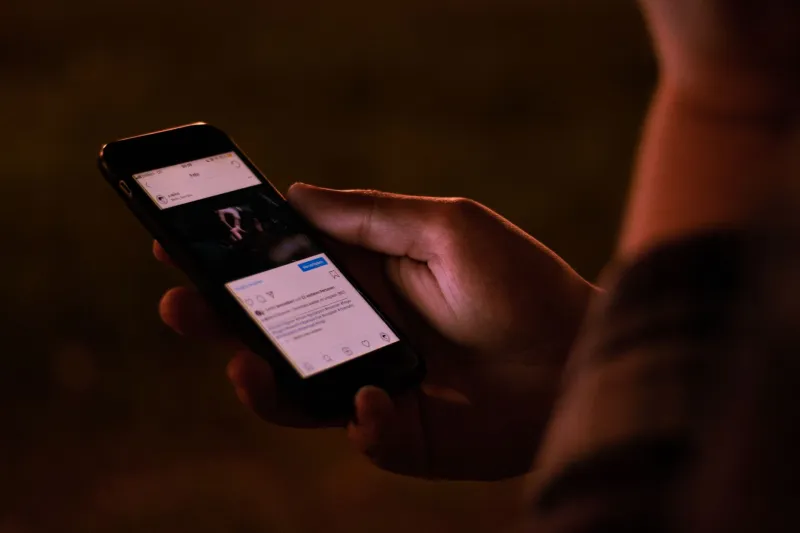
Somewhere around 11:47 PM on a Tuesday, you made a choice. You could have put the phone down. You could have watched something warm and resolved — a cooking competition, a feel-good documentary about dogs, literally anything with a sunset and a swell of strings. Instead you spent forty minutes watching dashcam footage of a tornado eating a strip mall, then pivoted to a Reddit thread about supervolcano eruption timelines, then ended up in a YouTube rabbit hole about what a Carrington Event would do to the power grid.
And here's the part nobody talks about: it felt fine. Maybe even a little good.
Welcome to the catastrophe loop. Population: most of us.
The Paradox That Shouldn't Make Sense (But Totally Does)
On paper, consuming content about the end of everything should spike anxiety through the roof. Disaster footage, collapse narratives, worst-case-scenario breakdowns — conventional wisdom says this stuff should be poison for a stressed-out brain. Avoid the news before bed. Limit doom content. Touch grass.
But a funny thing happens when you actually talk to people about their media habits. Apocalypse content doesn't always feel like poison. For a significant chunk of anxious Americans, it feels like relief. Like exhaling. Like finally someone is speaking the quiet part out loud.
Psychologists have a few ways of explaining this, and none of them are particularly comforting — which is kind of the point.
The first piece of the puzzle is something called anxiety reduction through worst-case exposure. When your brain is running constant background threat simulations — which anxious brains absolutely do, at all hours, without your permission — there's a kind of cognitive relief that comes from having an external catastrophe to focus on. The vague, shapeless dread that lives in your chest gets a form. It gets a name. Suddenly you're not anxious about nothing; you're anxious about the supervolcano. And the supervolcano, perversely, is easier to sit with than the shapeless thing.
The second piece is certainty, even when the certainty is terrible. Optimistic content asks you to hold open possibilities. Hope, by definition, is unresolved — it's a bet on a future that hasn't happened yet. Catastrophe content offers the opposite. Collapse has already been modeled. The simulations have been run. The Reddit thread has done the math. There's something almost restful about a conclusion, even a horrifying one.
Why Hope Is Harder to Watch Than Hell
This is where things get genuinely strange. Hope, for a lot of people right now, has become actively harder to consume than disaster.
Think about the last time you watched something relentlessly optimistic — a political speech about a brighter future, an ad campaign built on possibility, a documentary about human ingenuity solving everything. Notice any friction there? Any low-grade irritation, or worse, a kind of hollow feeling that's hard to name?
That friction has a cause. After years of economic instability, a pandemic that reshuffled everyone's sense of what's normal, climate news that gets worse on a quarterly basis, and a political landscape that seems to operate in a permanent state of crisis, optimistic messaging has started to carry a hidden cost: the cost of being wrong again.
Hope requires trust. It requires you to extend belief toward a future outcome. And trust is a resource that gets depleted. When the optimistic version of events keeps not arriving — when the recovery takes longer than promised, when the solution turns out to be more complicated than the explainer made it look — the brain starts doing a quiet, ugly calculation. It starts deciding that hope is the more dangerous emotional position. That it's safer to expect the worst and be wrong than to expect the best and get gutted.
Disaster content, by contrast, asks nothing of you. It doesn't want your trust. It doesn't promise a payoff. It just shows you the fire and lets you watch.
The American Flavor of This Problem
This isn't a universal phenomenon, but there's a distinctly American texture to it. The US has always had a complicated relationship with apocalypse — from Puritan fire-and-brimstone sermons to Cold War nuclear anxiety to the Left Behind book series selling 65 million copies. End-times thinking is practically a cultural tradition here.
But what's different now is the mainstreaming of the aesthetic without the theological scaffolding. Previous generations of American doom consumption came packaged with at least the possibility of meaning — the rapture, the righteous survivors, the lesson learned. Contemporary catastrophe content is often stripped of all that. It's just the collapse, rendered in high resolution, available on demand, without a moral.
That's actually more unsettling than the old version. And somehow, for a lot of people, more watchable.
Platforms have figured this out, obviously. The algorithmic architecture of every major video and social media service has learned that disaster content generates longer watch times, more shares, and more return visits than almost any positive content category. You're not imagining the feed. It is tilted toward the dark. Because the dark keeps you scrolling, and scrolling is the product.
What the Catastrophe Loop Is Actually Doing to You
Here's where Blood Cube has to be straight with you, because this isn't just an interesting psychological quirk — it has an edge.
The short-term relief of catastrophe consumption is real. The anxiety reduction mechanism works. The sense of control-through-knowledge is genuine. But the loop has a compounding quality that's worth paying attention to. Each session recalibrates what your nervous system treats as baseline. The content that felt edgy last month starts feeling neutral. The content that felt neutral starts feeling insufficient. The brain keeps asking for a higher dose of the worst-case scenario to achieve the same feeling of resolution.
That's not a metaphor. That's a documented pattern in how the stress response system adapts to repeated stimulation. You're not becoming more informed. You're becoming more calibrated to catastrophe — which means ordinary life, with its ambiguity and unresolved outcomes and irritating lack of dramatic finality, starts feeling worse by comparison.
The apocalypse content isn't preparing you for disaster. It's making the non-disaster feel unbearable.
Sitting With the Dark Without Drowning in It
None of this means you have to swap your disaster feeds for affirmation content and pretend the world isn't on fire. That would be its own kind of dishonesty, and frankly, it's not a trade most of us are willing to make.
But there's a difference between engaging with dark content as a genuine form of meaning-making — the way good horror does it, the way dark fiction does it, the way the best collapse narratives do it — and using it as a numbing agent. One involves you. The other just runs you through a loop until you're too tired to feel the difference.
The catastrophe is real. The anxiety is legitimate. The comfort of watching it all burn is, in its own twisted way, completely understandable.
Just know what you're actually doing when you reach for the supervolcano thread at midnight. Know that the warmth you feel is borrowed, and the interest rate is steep.
The dark is fine. We live here. Just don't let it be the only temperature you can feel.