Your Eyes Are Lying to You and Someone Built That Lie on Purpose
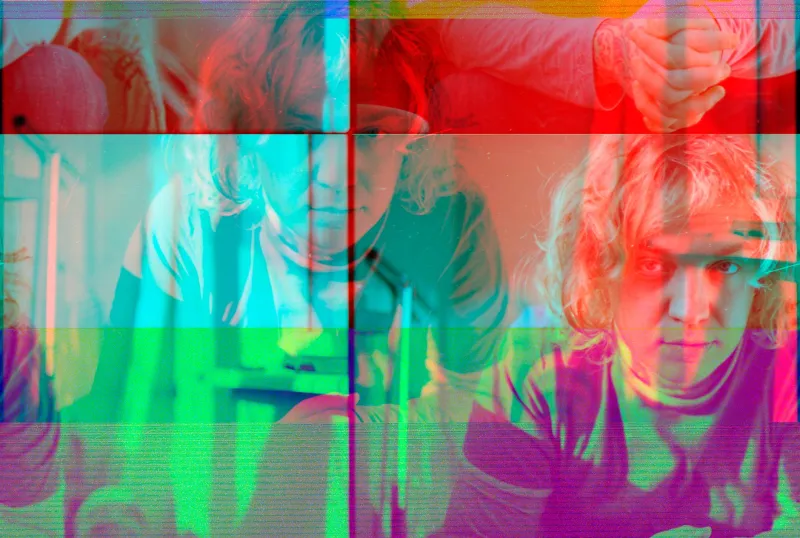
There's a particular flavor of dread that doesn't come from jump scares or gore reels. It creeps in slower, settles somewhere behind your sternum, and just stays. It's the dread of realizing the ground you've been standing on was never solid. That's what deepfakes actually are — not a tech novelty, not a political problem, not even primarily a celebrity scandal. They're an epistemological horror show, and we're all in the audience whether we bought tickets or not.
We've spent decades training ourselves to distrust written text, to second-guess anonymous sources, to read headlines with at least one eyebrow raised. But somewhere hardwired beneath all that media literacy, we still believed our eyes. Video felt like proof. Seeing felt like knowing. That reflex — ancient, biological, deeply human — is exactly what synthetic media has learned to exploit.
The Uncanny Isn't in the Valley Anymore
The original uncanny valley concept described our discomfort with humanoid robots that looked almost right but not quite — close enough to trigger recognition, wrong enough to trigger revulsion. Early deepfakes lived there. You could spot the blurry edges, the dead-eyed stare, the mouth that moved a half-beat wrong. Your brain flagged it. You felt the wrongness.
That's mostly gone now.
The technology crossed a threshold somewhere around 2022 and just kept walking. Today's synthetic video can replicate micro-expressions, match lighting conditions, sync breath patterns, and reproduce the specific way someone's voice catches when they're nervous. The uncanny valley didn't disappear — it got paved over. What replaced it is something worse: seamless falseness. Video that your nervous system reads as real because, by every metric your nervous system knows how to check, it is real.
This is where the horror genre has historically lived — in the gap between what we perceive and what's actually true. Horror has always known that the most terrifying thing isn't the monster. It's the moment you realize the monster has been in the room the whole time and you never noticed. Deepfakes industrialized that moment and put it on a server farm.
Manufactured Dread at Scale
Creators in the darker corners of the internet have figured this out. Not just the political operatives and the revenge-porn distributors — though yes, those people exist and they're doing real damage — but the artists, the experimenters, the ones who are genuinely interested in what synthetic media feels like as a medium.
There's a whole subgenre of deepfake horror content now. Found footage reimagined with real public figures saying things they never said, placed in situations they were never in, delivered with the casual authenticity of a leaked clip. Short films where you spend the entire runtime questioning whether the person on screen is real. AI-generated faces that exist nowhere in the physical world, staring out from screens with histories and expressions and a complete absence of any actual soul behind them.
The psychological mechanism being exploited here isn't fear of the content itself. It's fear of your own unreliability as a witness. Horror has always played with paranoia — the neighbor who might be something else, the friend who doesn't seem quite right today. Deepfakes take that paranoia and give it infrastructure. They make the doubt rational. Which is so much worse than making it irrational.
When you watch a horror movie and feel scared, some part of your brain is always holding the exit. It's not real. The monster isn't real. I can leave. Deepfake dread doesn't offer that exit. The anxiety it produces isn't about fiction. It's about actual evidence of actual people in the actual world, and your actual inability to verify any of it.
The Psychological Toll Nobody's Talking About Enough
Researchers studying media consumption in a post-deepfake environment have started identifying something they call epistemic anxiety — a chronic low-grade stress response triggered by the persistent inability to verify reality through normal means. It's not panic. It's more like living with a slow leak. Every video you watch, every audio clip you hear, some background process in your mind is running a check it can no longer complete. And that incomplete check just... runs. Forever.
For horror audiences — people who've actively trained themselves to sit with discomfort and dread — this produces a genuinely strange experience. The genre you love has leaked into the texture of daily life. The horror is ambient now. It's in the news clip you're not sure about. It's in the phone call that sounds exactly like your cousin but something's slightly off. It's in the video evidence that should settle the argument but somehow doesn't.
Some creators are leaning into this deliberately. There's a school of synthetic horror that refuses to tell you whether what you're watching is real. No disclaimer. No credits. No winking acknowledgment that this is art. Just content, dropped into the world, designed to make you feel the specific vertigo of not knowing. It's uncomfortable as hell. It's also probably the most genuinely novel horror innovation of the last decade.
When the Tool Becomes the Monster
What makes deepfake horror distinct from every other subgenre is that the technology itself is the antagonist. You don't need a script. You don't need a director. The horror emerges from the existence of the capability — from knowing that anyone, anywhere, with access to the right software and a few hours of footage, can put words in your mouth, crimes on your record, or your face in a situation you never consented to be in.
This is body horror without the body. It's identity horror — the violation of the self at the level of representation, the colonization of your image by someone else's intent. The traditional horror monster takes something from you physically. This one takes your face and makes it a weapon.
And unlike a slasher villain or a supernatural entity, this threat has no weakness. It doesn't have a lore you can learn. There's no silver bullet, no ritual, no final girl who figures out the rules. The technology improves faster than detection does. The gap between creation and verification just keeps widening.
Learning to Live in the Dark
Here's the thing about horror as a genre, though — it's always been a rehearsal space. You go in scared, you sit with the fear, you come out having practiced something. The question deepfake horror is forcing us to practice is genuinely important: How do you operate in a world where seeing isn't believing?
Some people are going to land on cynicism — disbelieve everything, trust nothing, retreat into information silos that feel safe because they're familiar. That's the bad outcome. Others might develop something more useful: a kind of calibrated epistemic humility, an ability to hold claims lightly, to demand corroboration, to be comfortable with uncertainty without being paralyzed by it.
The horror genre has always had a secret function as a training ground for psychological resilience. Maybe this is the next version of that. Maybe learning to watch a deepfake and sit with the discomfort of not being certain — really sit with it, not just perform skepticism — is a skill that matters now.
Or maybe the technology just keeps getting better and eventually we're all just guessing all the time.
Either way, the darkness has a new shape. And it's wearing your face.