Breaking Point as Brand: How Influencers Learned to Sell Their Unraveling

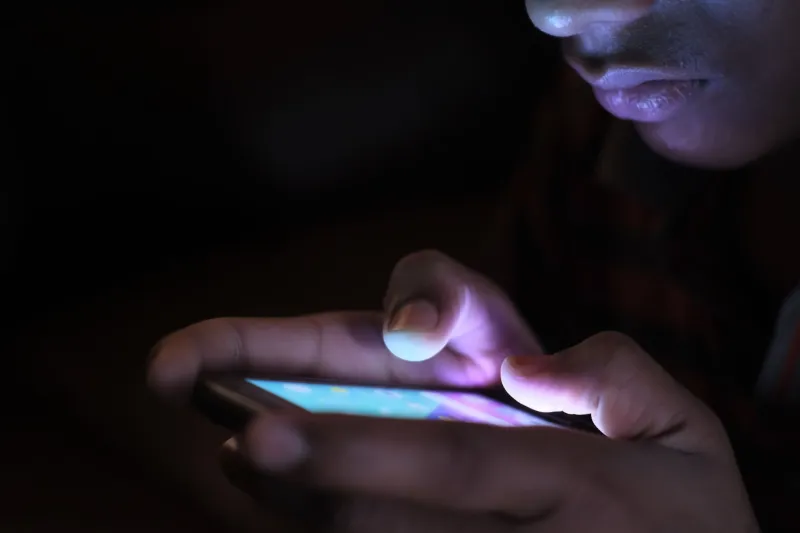
There's a particular kind of video that lives rent-free in the algorithm's brain. No jump scares. No practical effects. No carefully crafted monster lurking in a darkened hallway. Just a person — usually young, usually exhausted, usually crying — staring directly into a front-facing camera and coming completely apart at the seams. And somehow, inexplicably, that video racks up eight million views before breakfast.
Welcome to the most effective horror content on the internet. Nobody greenlit it. Nobody wrote a treatment. It just happened, and then it happened again, and then it happened so often that creators started to notice the numbers.
That's where things get genuinely dark.
The Anatomy of a Breakdown Video
Let's be clear about what we're actually talking about here. The genre has a few distinct flavors. There's the tearful confession video — addiction, infidelity, mental illness, eating disorders — delivered with smudged mascara and a ring light still on because the creator hit record before they fully thought it through. There's the "I'm not okay" check-in that arrives with suspicious regularity every time a sponsorship deal falls through. And then there's the full-on public unraveling, the multi-day spiral documented in stories and posts and cryptic tweets, the kind that has followers refreshing obsessively wondering if this is the one that ends badly.
All three formats share a structural DNA. Vulnerability as content. Suffering as spectacle. The self as both the subject and the sacrifice.
None of this is entirely new — confessional culture has existed since at least the Jerry Springer era, and reality TV built an entire empire on watching people hit their lowest points. But social media collapsed the distance between performer and audience in a way that television never could. These aren't strangers on a stage. They're people you've followed for years, whose coffee orders you know, whose dogs have names you remember. The parasocial relationship makes the breakdown feel personal. And personal feels real. And real feels irresistible.
When the Monster Looks Back at You
Here's the question Blood Cube has to ask, because it's the one nobody else is really willing to sit with: at what point does a creator stop being someone processing pain publicly and start being someone who has learned that pain performs?
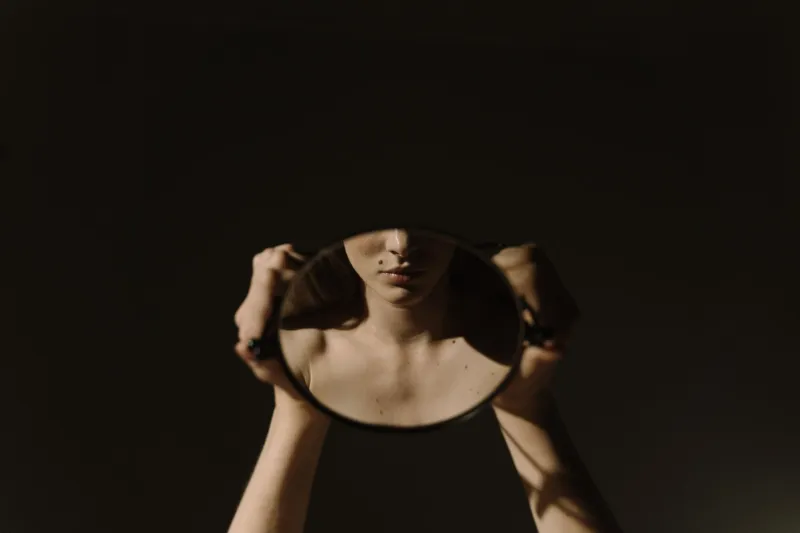
The answer is genuinely uncomfortable because it's not binary. Both things can be true simultaneously. A creator can be authentically struggling and acutely aware that their struggle is content. The mental illness can be real and the camera angle can be considered. The addiction can be destroying them and the sponsorship from a therapy app can be waiting in their inbox.
This isn't an accusation. It's an observation about what the system rewards. Platforms don't care whether your tears are performative or genuine — engagement is engagement. The algorithm processes suffering the same way it processes dance challenges. If breakdown content drives watch time, the platform will surface more breakdown content, which trains creators to understand that breakdown content works, which creates an incentive structure that is, if you squint at it right, genuinely monstrous.
Some creators have talked openly about this trap. The moment they realized their worst day ever was also their best-performing video. The strange grief of watching their most private confession become a shareable asset. The way their audience started to expect the darkness, started to get restless during the stable periods, started sending messages asking if everything was okay when what they really meant was give us something to feel.
The Audience Isn't Innocent Either
Let's not let the viewers off the hook here, because that would be dishonest and Blood Cube doesn't really do dishonest.
The people watching these videos aren't passive recipients of content that was forced on them. They clicked. They rewatched. They left comments that said "sending love 💕" while simultaneously screenshotting the most dramatic frames to post on Reddit forums dedicated to dissecting the creator's psychological state. They built parasocial relationships so intense that a creator going offline for a week generates genuine panic, and a creator going offline permanently generates the kind of grief that used to be reserved for people you'd actually met.
There's a term that gets thrown around in psychology circles — morbid curiosity — and it describes the very human tendency to be drawn toward content involving suffering, danger, and death. It's the same impulse that makes us slow down near car accidents. It's ancient, it's wired in, and the internet has given it a buffet.
Watching an influencer fall apart scratches multiple itches at once. It's intimate. It's dramatic. It provides a strange kind of comfort — at least I'm not that bad — while also offering genuine emotional resonance for people who recognize the feelings being described. The audience isn't purely predatory. But it isn't purely compassionate either. It's something messier and more human than either of those things.
The Cost Nobody's Calculating
Here's what gets lost in the engagement metrics: these are actual people. The creator crying on camera has a body that's going to carry the weight of having done that. The person who documented their addiction recovery in real time has to live in a world where their worst moments are archived, searchable, and occasionally resurfaced by strangers who think it's funny or instructive or content.
Some creators have spoken about the aftermath — the strange dissociation of watching yourself fall apart, the way it fragments your sense of self, the pressure to keep producing vulnerability even after you've started to heal because your audience built their relationship with you around your suffering and doesn't quite know what to do with your stability.
Others don't get an aftermath. Some of the most high-profile cases of creator breakdown have ended badly in ways that were, in retrospect, documented in real time by audiences who thought they were watching a performance.
That's the part that should haunt us. The line between a creator who is performing darkness and a creator who is genuinely drowning in it is not always visible from the outside. Sometimes it's not visible from the inside either.
Where Darkness Takes Shape
Blood Cube exists in a space that takes dark content seriously — seriously enough to look at it without flinching, and seriously enough to ask what it's actually doing to everyone involved. The influencer breakdown genre is horror in the most literal sense available to us right now. It's real. It's human. It doesn't need a monster because the machinery itself is monstrous enough.
The creator learns that suffering sells. The platform rewards the suffering. The audience consumes it. The creator suffers more. Nobody in that loop is entirely the villain, which somehow makes it worse.
Next time you're three videos deep into a creator's public unraveling at midnight, it's worth sitting with that for a second. Not with guilt — guilt isn't useful here. Just with clarity. You're watching something real get processed into content, and the cost of that processing is being paid by a person who might not have fully understood what they were signing up for.
That's not entertainment. That's something older and stranger and considerably harder to look away from.