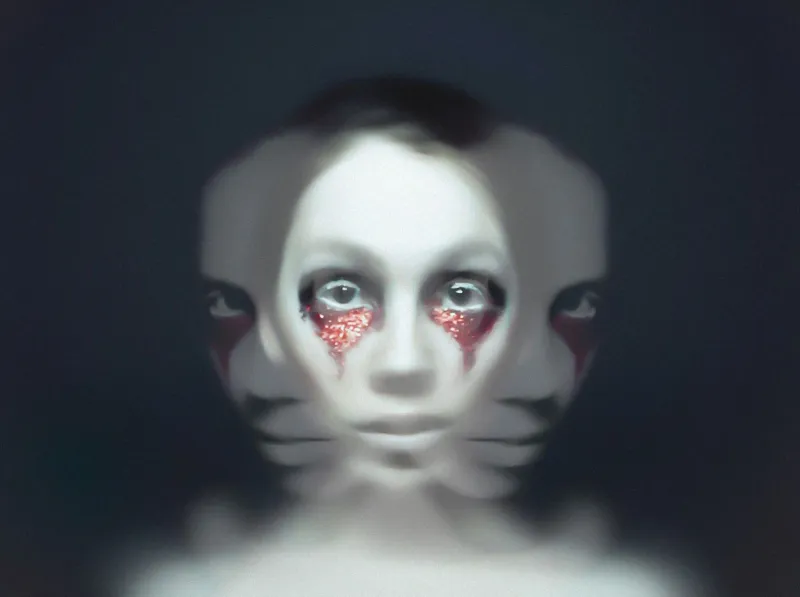
Mirror, Mirror: The Uncomfortable Truth About Who's Really Hunting in True Crime

There's a moment — and if you're a true crime regular, you know exactly the one — where you catch yourself annoyed that an episode ended before the killer was caught. Not sad for the victim. Not disturbed by the violence. Just... frustrated that the story got interrupted. Like a Netflix cliffhanger. Like you were owed the resolution.
That moment is worth sitting with for longer than most of us are comfortable doing.
America has built a cathedral out of true crime. Podcasts, docuseries, Reddit threads, fan wikis, YouTube retrospectives, Patreon communities dedicated to cold cases — the infrastructure is enormous, and the congregation is massive. We tell ourselves we're engaged in something meaningful. Justice. Awareness. Empathy. And sometimes, genuinely, that's true. But the genre has grown so bloated, so deeply woven into everyday entertainment, that the original justifications have started to feel like the same kind of rationalizations we study in the criminals themselves.
The Anatomy of a Justification
Serial predators are famous for their internal logic. The self-serving narratives they construct to make their behavior feel reasonable, even righteous. Researchers who study criminal psychology consistently find that perpetrators don't think of themselves as monsters. They have frameworks. Reasons. Ways of reframing harm as something else entirely.
Now consider the average true crime consumer's greatest hits of self-justification:
"I'm raising awareness." "Understanding how killers think helps protect people." "These victims deserve to have their stories told." "I just find human psychology fascinating."
None of these are inherently false. But they're also not the whole picture. Because if awareness were really the goal, we'd spend equal time on the structural failures — inadequate law enforcement resources, racial bias in missing persons coverage, the way poverty makes certain victims invisible. We don't. We spend that time rewatching the interrogation footage and debating whether the suspect's eye contact looked guilty.
The justification is real. The behavior it's justifying is something different.
Feeding Patterns
Here's the part that gets genuinely uncomfortable: the consumption pattern of obsessive true crime fans shares structural DNA with predatory behavior itself.
Predators, particularly the serial variety that dominate true crime content, are defined in part by their relationship to objectification. The victim becomes a means to an end — a vehicle for the predator's needs rather than a full human being with a life that extends beyond the narrative. The crime, in the predator's mind, is a story they're telling about themselves.
Spend enough time in true crime fan communities and you'll notice something similar happening at scale. Victims get reduced to their worst moments. Their deaths become content. Their families become secondary characters in a drama that exists primarily for audience satisfaction. When a victim's relative asks podcasters and documentarians to stop covering their loved one's case, the community's reaction is often... resistance. Sometimes outrage. The story doesn't belong to the dead anymore. It belongs to the audience.
That's not empathy. That's extraction.
The Dopamine Loop Nobody Talks About
True crime isn't just psychologically interesting — it's neurologically engineered, whether intentionally or not, to keep you hooked. The unresolved case triggers the brain's discomfort with open loops. The drip-feed of evidence mimics investigative participation. The "community" aspect of fan forums creates social reward structures around engagement with the content.
You're not just watching. You're hunting. The genre gives you the cognitive experience of pursuit without any of the moral weight.
And here's where the mirror gets really uncomfortable: the thrill of the hunt is precisely what draws certain predatory personalities toward their crimes in the first place. The pursuit. The control. The sense of being the one who knows something others don't.
Obviously, listening to a podcast is not the same as committing violence. That's not the point. The point is that the psychological reward loop being activated has more overlap with predatory cognition than the genre's sanitized self-image likes to acknowledge.
The Victim Problem
Ask yourself honestly: do you know the names of the victims in your favorite true crime cases the way you know the name of the killer?
For most people, the answer is no. Or at least, not with the same depth. We know the killer's childhood, their psychology, their famous quotes from prison interviews. The victims are often defined almost entirely by their relationship to the person who ended their life. They become supporting characters in someone else's story.
This is a structural feature of the genre, not a bug. The killer is the protagonist because the killer is the one with agency in the narrative. They made choices. They had a plan. Dramatically speaking, they drive the plot. The victim is, in the coldest possible storytelling terms, the inciting incident.
If that framing makes you queasy, good. It should. Because it means that in the story architecture of true crime entertainment, the audience is positioned to follow — and implicitly identify with — the person doing the hunting.
So What Do We Do With This?
Nothing here is an argument that true crime is irredeemably evil or that enjoying it makes you a bad person. That would be lazy, and it would also be wrong. The genre has produced genuinely important journalism. It has exonerated innocent people. It has shone light on systemic failures that powerful institutions wanted buried.
But the genre has also metastasized into something its best examples don't represent. The sheer volume of content — the daily podcast drops, the YouTube channels churning out "Top 10 Unsolved Murders" videos, the TikTok edits set to moody music — has turned human tragedy into a content category. And the audience has largely accepted that transformation without examining what it costs.
The parasite within isn't some external force that infected true crime fans against their will. It grew naturally from a culture that learned to monetize darkness without ever asking who pays the real price. The victims' families pay it. The communities left behind pay it. And in some quiet way that's hard to articulate but easy to feel if you let yourself, the audience pays it too — trading something in their capacity for genuine empathy every time they click play on another dead woman's story and feel, just for a second, that familiar little thrill.
The monsters we're afraid of didn't come from nowhere. They came from the same species that can't stop watching them.
Maybe that's the story worth telling.