Death Wish Real Estate: The Booming Market for Homes That Should Terrify You
There's a house in Los Angeles where a famous actress reportedly saw a shadow figure standing at the foot of her bed every night for six months before she finally moved out. The listing mentioned this. Enthusiastically. It sold in eleven days, above asking price.
Welcome to one of the weirder corners of American consumer culture — a place where murder sites, haunted Victorian mansions, and homes with genuinely horrifying histories are not just moving off the market, they're moving fast. Something has shifted in the collective American psyche around what makes a home desirable, and the answer, increasingly, is darkness.
The Numbers Don't Lie (Even When the Sellers Do)
Stigmatized property used to be a legal and financial nightmare. Realtors in many states are still required to disclose deaths on a property — particularly violent ones — and for decades, that disclosure was essentially a death sentence for the listing. Not anymore.
Sites like Diedinhouse.com have turned morbid real estate history into a subscription service, letting buyers actively seek out properties with dark backstories. The site reportedly processes millions of address searches per year. That's not people accidentally stumbling onto grim information — that's intentional hunting.
And then there's the celebrity haunt premium. The Sharon Tate murder house in Cielo Drive was demolished, but the new structure built on that lot still commands attention and inflated value purely from association. The Amityville Horror house on Long Island has changed hands repeatedly, each time generating media coverage that functions as free advertising. The current owners reportedly field inquiries constantly from buyers who would love to own a piece of that particular nightmare.
Real estate economists have started tracking what they call the "stigma discount" — and in many markets, it's shrinking or reversing entirely. In some cases, documented haunted histories or murder associations are functioning as premiums.
Psychology of the Purchase: Why Your Brain Wants This
Here's where it gets interesting. The impulse to move toward frightening things rather than away from them isn't new — horror entertainment has banked on it forever — but applying that same logic to where you sleep represents a meaningful escalation.
Psychologists studying morbid curiosity (yes, that's a real research field) describe a phenomenon where proximity to death and danger creates a paradoxical sense of vitality. Basically, being near the place where something terrible happened makes some people feel more intensely alive. The house isn't threatening them — it already consumed whoever it was going to consume. They survived just by showing up.
There's also a control narrative at work. Buying a murder house is, in a strange way, an act of dominance over the story. You're not the victim. You're the person who chose this, who walked in with eyes open, who made the darkness domestic. That's a specific kind of power trip, and it's apparently worth a considerable down payment.
For a generation that has grown up processing anxiety through horror content — using scary movies and true crime podcasts as emotional regulation tools — the line between consuming darkness and inhabiting it was always going to blur eventually.
Haunted Chic: When Interior Design Meets the Abyss
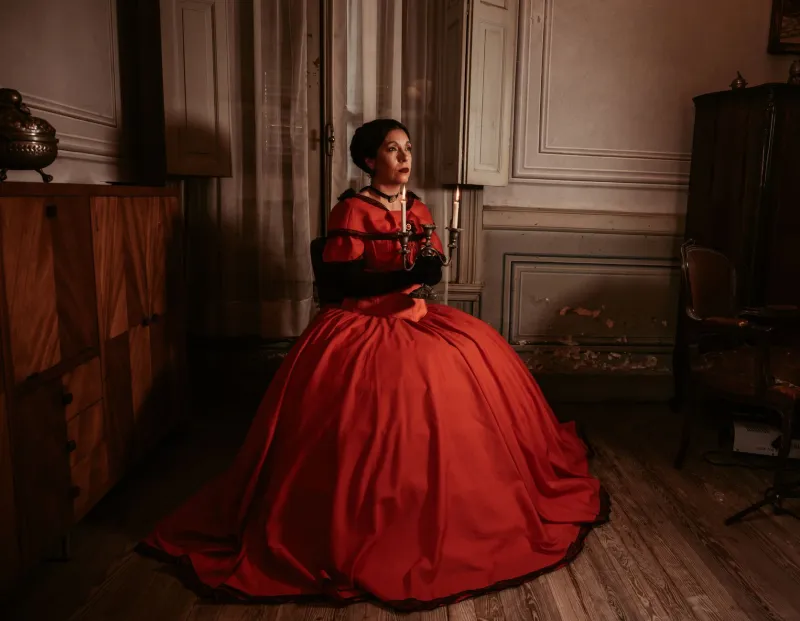
Separate from the stigmatized property market but deeply entangled with it is the rise of what designers are awkwardly calling "dark aesthetics" or, in its more committed form, "gothic maximalism." Black walls, Victorian mourning portraits, taxidermy, apothecary shelving, candelabras that aren't ironic — this stuff is genuinely mainstream now.
Walk through any major city's design district and you'll find showrooms that look like they were curated by someone who read too much Edgar Allan Poe and had an excellent budget. The aesthetic has moved from niche Tumblr subculture to HGTV-adjacent territory with remarkable speed.
What this means for haunted home buyers is that the look of the thing now aligns with actual market trends. A Victorian house with documented ghost sightings and original dark wood paneling isn't just a conversation piece — it's a property that photographs beautifully for Instagram, fits a desirable aesthetic, and comes with a backstory that nobody else on the block can match.
The haunted house has become a flex.
The Community Nobody Expected
One of the stranger developments in this space is the emergence of actual community around stigmatized property ownership. Facebook groups, subreddits, and dedicated forums connect people who've bought dark-history homes — sharing experiences, comparing paranormal incidents, offering advice on everything from historical research to which EMF detectors are worth buying.
These aren't fringe weirdos (or not only fringe weirdos). The demographic skews educated, relatively affluent, and deeply into the research aspect of what they've purchased. Many owners commission historical deep dives into their property's past, hire paranormal investigators not because they necessarily believe in ghosts but because the investigation itself is interesting, and document everything obsessively.
Some have turned it into income. Haunted Airbnb listings are a genuine market segment. A house in New Orleans with a documented history of tragedy books out months in advance at rates that would make a boutique hotel envious. Guests aren't just tolerating the dark history — they're paying specifically for access to it.
What It Actually Feels Like
Talk to people who've made this choice and the explanations are surprisingly coherent. A woman in Ohio who bought a house where a previous owner died by suicide described it as feeling like the house had weight — a texture that newer construction lacked. She didn't feel threatened. She felt like she was part of a longer story.
A couple in New England who purchased a property with a documented 19th-century haunting history talked about the way the house's reputation created an immediate social identity. Everyone in town knew who they were. The house gave them context.
Neither of these people are particularly unusual. They're just honest about something a lot of Americans are starting to admit: that sanitized, cheerful, brand-new construction feels hollow in a way that history — even dark history — doesn't.
The Takeaway Nobody Wants to Say Out Loud
America has always had a complicated relationship with death. We hide it, medicalize it, keep it out of polite conversation. But the haunted house market suggests something is shifting. People are actively seeking proximity to mortality, to violence, to the places where the worst things happened — and they're willing to pay for it.
Maybe it's the logical endpoint of a culture that processes everything through content. Maybe it's a generation that grew up scared all the time finding a way to make fear feel like home. Maybe it's just that the uncanny valley, when you live in it long enough, stops feeling uncanny.
Or maybe some of us just really want to live somewhere with a story worth telling.
The market suggests we're not alone in that.