Your Mom's Face Is a Lie Now: The Deepfake Horror Nobody Saw Coming
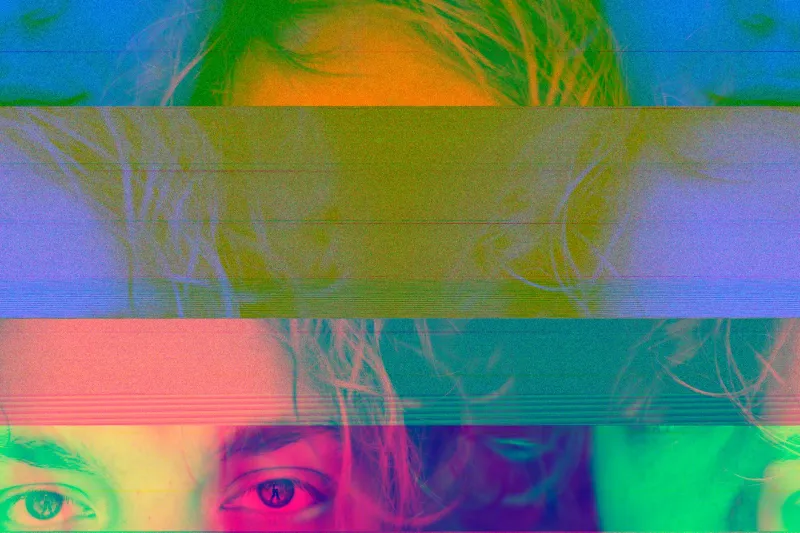
There's a particular flavor of dread that doesn't have a clean name yet. It's the feeling you get watching a video of your sister say something she would never say, in the exact cadence she always uses, with the little head-tilt she does when she's being serious. Everything checks out. Your brain is screaming yes, that's her. And it's completely, deliberately fake.
Welcome to the new psychological horror show. No haunted houses required.
The Uncanny Valley Just Got a Mailing Address
For decades, the uncanny valley was a concept that lived mostly in animation studios and robotics labs. The idea is simple enough: the closer something gets to looking human without quite landing there, the more profoundly wrong it feels. We're wired to detect that wrongness. It's probably evolutionary — spotting the thing pretending to be human kept us alive long enough to be here worrying about it.
Deepfakes broke that safety net.
Early deepfakes were obvious. Faces that melted at the edges, eyes that didn't blink right, mouths that didn't sync. Unsettling, sure, but detectable. The technology has since sprinted past that stage with alarming speed. Today's synthetic media — generated by tools that are increasingly cheap and accessible — can fool not just casual viewers but forensic analysts working under time pressure. The uncanny valley hasn't disappeared. It's just been paved over, and we're all living on top of it now.
What makes this a horror story rather than just a tech story is the target. It's not celebrities getting fake scandal videos anymore, though that still happens constantly. It's regular people. It's your coworker, your ex, your kid's teacher. It's the face of someone whose expressions you've memorized over years of actual human contact being handed to a stranger like a mask they can wear whenever they want.
Real Cases, Real Damage
In 2023, a high school in suburban New Jersey became ground zero for something parents and administrators didn't have language for yet. Male students had used an AI image generation tool to create explicit fake images of female classmates. No video, just stills — but the principle is identical. The girls recognized their own faces on bodies that weren't theirs, attached to scenarios that didn't happen, circulating through the school's social networks with the casual velocity of a meme.
The psychological impact wasn't casual at all.
This is the pattern that keeps emerging in documented cases: the harm isn't primarily about anyone being technically fooled into believing the content is real. It's about the violation of having your face detached from your identity and used as raw material. It's about the permanence of digital content in a world where deletion is a myth. And it's about the specific, nauseating horror of seeing yourself do something you didn't do, rendered convincingly enough that you have to explain yourself.
In elder fraud cases — a category that's been exploding — deepfake audio clones of family members have been used to convince seniors their grandchildren are in danger and need money wired immediately. The voice is right. The panic sounds real. The emotional manipulation is surgical. Several victims have described the experience afterward as feeling like they'd been inhabited, like something had climbed inside their most trusted relationships and hollowed them out.
What's Happening in Your Head When You Watch
Neurologically, this stuff is doing something genuinely strange to us. Human brains process faces differently than almost anything else — there's a dedicated region, the fusiform face area, that lights up specifically for facial recognition. It's fast, automatic, and deeply tied to emotional response. When you see a face you know, that system doesn't just register identity. It triggers trust, memory, emotional context. All of that fires before your conscious mind has time to run a fact-check.
Deepfakes exploit that pipeline directly.
Researchers studying deepfake detection have found that even people who know they're watching a deepfake and are actively trying to identify it still show physiological stress responses consistent with genuine interpersonal threat. Your rational brain can hold the knowledge that the video is fake. Your nervous system is already reacting to your mother's face telling you something devastating. The two systems don't sync up cleanly, and that gap — that space between knowing and feeling — is where the horror lives.
Some researchers have started calling this "epistemic anxiety," a chronic low-level state of not being able to fully trust perceptual evidence. It's not paranoia exactly. It's the reasonable response to an environment where your senses have been compromised.
The Trust Collapse Nobody's Measuring
Here's the part that keeps getting buried under the more dramatic headlines: deepfakes are doing damage even when they're not deployed. The knowledge that they exist, that anyone with a grudge and a laptop can generate a convincing fake of your face, is already reshaping how people interact with video evidence in their personal lives.
Domestic abuse survivors have reported that abusers are now preemptively using the existence of deepfake technology as a gaslighting tool — claiming that real evidence of abuse could be fake, planting doubt before any footage is even produced. Lawyers handling harassment cases describe clients who have genuine, unaltered video evidence that opposing parties are successfully casting doubt on simply by invoking the word "deepfake" in front of a jury.
The technology doesn't even need to be used. Its existence is the weapon.
Meanwhile, the authentic moments — the real video calls, the genuine expressions caught on someone's phone — are getting harder to hold onto with full confidence. We're building a world where every tender or terrible moment captured on camera comes with a question mark attached.
Where Do We Go From Here
There's no clean ending to offer here, and anyone selling you one is probably selling you something else too. Detection tools exist and are getting better, but they're in a permanent arms race with generation tools, and generation keeps winning. Legislation is moving — several states have passed or are considering laws specifically targeting non-consensual deepfakes — but law moves at government speed while technology moves at startup speed.
What's actually shifting is something harder to quantify: our relationship with visual truth. Generations before ours had to reckon with the idea that photographs could be staged or edited. We're reckoning with the collapse of video as a privileged category of evidence, both in courts and in our living rooms.
The horror here isn't some distant sci-fi scenario. It's intimate. It's the face of the person who raised you being used to say something they'd never say. It's your own face, your own voice, your own expressions being turned into a tool in someone else's hands.
Seeing isn't believing anymore. And figuring out what we believe instead — that's the genuinely terrifying work we haven't started yet.