Same Movie, Different Demon: The Sacred Loop of Horror Rewatching
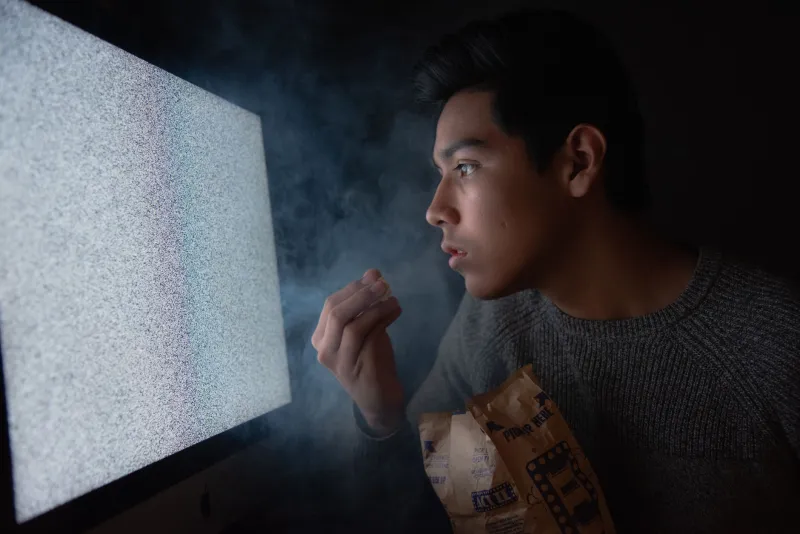
You've seen The Shining so many times you could recite the elevator blood sequence in your sleep. You've watched the chest-burster scene from Alien with enough people to have basically hosted a seminar on it. You know the exact frame where Pennywise appears in the drain, the precise moment the music shifts in Hereditary right before something unforgivable happens onscreen. And still — still — you queue it up again.
This isn't a quirk. It's a ritual.
And like most rituals, it means more than it looks like on the surface.
The Comfort of the Countdown
Here's the thing about rewatching a horror movie you already love: the fear doesn't disappear just because you know what's coming. Ask anyone who's sat through The Exorcist for the fifth time. The dread still pools in your chest. Your palms still get a little damp. But it's different. It's managed.
Neurologically, this is a pretty fascinating trick your brain plays on itself. When you encounter a genuine threat — or something your nervous system reads as a threat — your amygdala fires up and your body gets ready to run or fight. That's the fear response doing its job. But when you rewatch a horror film you've already processed, your brain is essentially running a controlled simulation. It knows the parameters. The monster can't actually get you. The ending is already written. Your body still produces some of the stress chemicals, but your prefrontal cortex is sitting in the back of the room with a clipboard, checking things off.
The result is something that feels a little like fear but lands more like a deep exhale. Researchers sometimes call this "mastery" — the psychological satisfaction of encountering something that once felt overwhelming and realizing you can handle it. Horror fans figured this out without needing a lab coat.
Every October, Without Fail
Pay attention to how horror rewatching tends to cluster. People don't just randomly rewatch Halloween in March (okay, some people do, and we respect them). There's a seasonality to it. October hits and suddenly everyone's pulling out their personal canon like it's a hymnal.
That's not an accident. Ritual behavior — in the actual anthropological sense — is almost always tied to time and repetition. You do the thing at the same moment, in the same way, and the act of repetition itself becomes part of the meaning. Thanksgiving has its turkey. Horror fans have their films.
For a lot of people in the US, specific horror movies are inseparable from specific memories. A Nightmare on Elm Street at a sleepover. Scream on a Friday night in middle school with the lights off. The Conjuring the first time you ever felt genuinely scared in a theater as an adult. Rewatching those films isn't just about the movie — it's about accessing the emotional state you were in when you first saw it. It's time travel with a body count.
Control in an Uncontrollable World
Let's be real about the world we're living in right now. Anxiety is basically the ambient soundtrack of American life. The news is a horror show with no credits, no runtime, and no guarantee that the third act resolves cleanly. In that context, the appeal of a horror movie — where the scares are finite, the monster has a shape, and the credits eventually roll — starts to look less like escapism and more like a coping mechanism with excellent cinematography.
There's a reason horror viewership tends to spike during periods of collective stress. After 9/11. During the 2008 financial collapse. Through the pandemic. When people feel like they've lost control of the actual world, they go looking for a world where the danger is visible, the rules are knowable, and surviving to the end credits feels like a genuine achievement.
Rewatching takes that a step further. You've already survived this particular horror. You know the shape of it. You know you make it out. In a week where nothing feels certain, sitting down with Get Out or It Follows or The Thing is a way of spending ninety minutes in a universe where you have already won.
The Conversation the Film Keeps Having With You
Here's something longtime horror fans will recognize: the same movie hits differently depending on where you are in your life. Rosemary's Baby means something completely different when you watch it at nineteen versus thirty-four. Midsommar lands in a new place entirely after you've been through a breakup that felt like it cracked something fundamental in you.
This is part of what keeps people coming back. It's not just comfort and mastery — it's that the film is a fixed object and you are not. Every time you return, you're bringing a slightly different version of yourself to the same story. The horror stays the same. Your relationship to it shifts.
That's closer to how people engage with religious texts than it might be comfortable to admit. The words don't change. The reader does. And the meaning generated by that collision is always slightly new.
Building Your Personal Canon
Every serious horror fan has a short list of films they return to reliably — not because those are objectively the best horror films ever made, but because those specific movies do something particular for that specific person. They hit the right nerve. They scratch the right itch. They deliver exactly the flavor of dread or release or catharsis that person is looking for.
That list is more personal than most people treat it. It says something about what scares you, what you've survived, what kind of comfort you're reaching for when things feel sideways. Someone whose rewatch pile is full of slashers is doing something different than someone who loops cosmic horror or psychological thrillers. The genre you keep returning to is a kind of self-portrait.
The Ritual Holds
Nobody needs to justify rewatching horror. The impulse is real, the reasons are layered, and the payoff is legitimate. But understanding what's actually happening when you sink into the couch for your fourteenth run through The Silence of the Lambs or your seventh trip through Hereditary makes the whole thing feel a little richer.
You're not just watching a movie. You're performing a small, private ceremony. You're practicing mastery over fear in a world that keeps generating new things to be afraid of. You're visiting a version of yourself from another time. You're doing what humans have always done — returning to the dark place, together or alone, because something in us needs to walk through it and come out the other side.
The credits will roll. They always do. And you'll probably watch it again next October.
Same monster. Different you. That's the whole point.