You Paid to Be Uncomfortable and You'd Do It Again: The Rise of Art That Wants You Gone
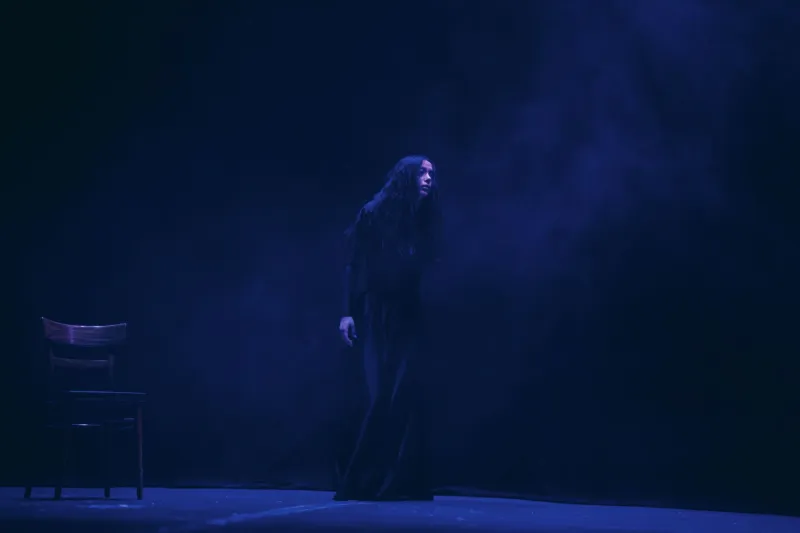
There's a woman standing about four inches from your face. She hasn't said anything in three minutes. She smells faintly of something you can't identify — not bad, just wrong. You paid $85 for this. You are not allowed to leave for another forty minutes. And the most disturbing part? You booked this ticket six weeks in advance.
Welcome to the cult of the uncomfortable, where the art isn't hanging on a wall waiting politely for your attention — it's in your personal space, reading your nervous system like a menu.
This isn't niche anymore. From immersive theater companies selling out runs in New York, Chicago, and LA, to galleries that require attendees to sign waivers before entry, to sound installations specifically engineered to induce low-grade dread, the market for deliberately alienating creative experiences has quietly exploded. People are spending real money — sometimes significant money — to be made to feel terrible in carefully curated ways. And they keep coming back.
So what the hell is actually going on?
The Comfort of Chosen Suffering
Here's the thing about discomfort you didn't choose: it's just suffering. Discomfort you walk into voluntarily, with a ticket stub in your hand and a waiver you signed at home? That's something else entirely.
Psychologists have a term for it — voluntary discomfort — and the research suggests that seeking out controlled negative experiences is deeply tied to a sense of agency. When you choose the suffering, you own it. You're not a victim of it. That distinction, as thin as it sounds, is apparently enough to flip the entire emotional valence of an experience.
Artists working in this space know this intuitively, even if they'd never use clinical language to describe it. The best transgressive work isn't random cruelty. It's engineered. The discomfort has architecture.
Take immersive theater, which has grown from a downtown curiosity into a genuine industry. Companies like Sleep No More — which has been running variations of its Punchdrunk model for years — pioneered the idea that audiences don't need to be comfortable observers. They can be participants, subjects, even antagonists in the work itself. The format has spawned dozens of imitators and innovators, some pushing much further into genuinely disturbing territory: performances where actors whisper things in your ear that they've inferred about you from your body language, rooms you're locked into alone, encounters designed to surface shame or grief or rage.
The people who seek these experiences out are not, by and large, adrenaline junkies or edgelords. They're often thoughtful, reflective, and surprisingly articulate about why they keep returning to work that makes them miserable.
The Gallery as Gauntlet
Visual art spaces have been getting in on it too, though the transgressive gallery experience tends to operate at a lower temperature — more slow dread than acute panic.
Think of installations that use infrasound (frequencies below human hearing) to induce unease in viewers who can't figure out why they feel wrong. Or exhibitions where the lighting is calibrated to be slightly, inexplicably off — not dark enough to be dramatic, just enough to make your eyes work harder than they should. Or curators who deliberately design flow patterns that disorient, that deny resolution, that leave you standing in front of work that refuses to let you feel done with it.
Some galleries have leaned even harder into the transactional nature of discomfort. Waivers are now common for anything involving physical proximity, sensory deprivation, or psychological provocation. Some experiences cap attendance at single digits. Others require attendees to answer intake questionnaires that are themselves part of the experience — designed to surface anxieties before you've even walked through the door.
The economics are fascinating. Scarcity plus discomfort, it turns out, is a remarkably effective pricing model. When something is exclusive and hard to endure, demand doesn't drop — it climbs. People want proof that they survived it. They want the story.
Why Now?
The timing of this boom isn't accidental. We are living through an era of profound sensory saturation. Content is everywhere, optimized relentlessly for engagement, calibrated to keep you scrolling, watching, clicking. Everything is trying to please you. Everything is trying to retain you.
Transgressive art is the photographic negative of that reality. It is, almost by definition, anti-algorithmic. It cannot be optimized for retention because retention isn't the point. The point is rupture. The point is to make you feel something that a streaming platform cannot manufacture and an influencer cannot sell.
There's also something specifically American about the current appetite for this kind of work. We live in a culture that is extraordinarily good at insulating people from physical and psychological discomfort — at least for those with enough money to do so. Transgressive art experiences are, weirdly, a luxury product that sells discomfort back to the people most effectively insulated from it. The audience is largely urban, largely educated, largely comfortable. They're not seeking suffering because life is easy. They're seeking it because the absence of genuine friction has started to feel like its own kind of horror.
What You're Actually Buying
Talk to enough people who frequent these experiences and a few themes emerge with striking consistency.
The first is presence. In a world where attention is perpetually fragmented, being forced into a situation where you cannot look away, cannot scroll, cannot opt out — that's genuinely rare. Even if the experience is miserable, it is completely there. You are completely there. For a lot of people, that quality of presence has become almost impossible to access any other way.
The second is proof of aliveness. This sounds melodramatic, but it comes up constantly. People describe these experiences as evidence that they can still be reached — that something can still get through the numbness. Being disturbed is, in this framing, a form of reassurance.
The third is community. The shared experience of surviving something difficult creates bonds that comfortable shared experiences simply don't. Horror audiences already know this. Transgressive art audiences are discovering it too.
The Line Nobody Agrees On
None of this means the space is without problems. The line between transgressive and exploitative is real, contested, and not always respected. There are experiences that cross into genuine harm — psychological, physical, or otherwise. There are artists who mistake cruelty for provocation and audiences who mistake endurance for meaning.
The best work in this space is rigorous about consent, careful about aftercare, and honest about what it's doing and why. The worst is just abuse with an artist statement attached.
But the appetite driving all of it — the deep, genuine hunger for experiences that don't flatter you, don't retain you, don't optimize for your comfort — that's real, and it's not going anywhere. If anything, it's growing.
You're going to keep paying to feel terrible. You're going to keep booking tickets six weeks out. And when someone stands four inches from your face and says nothing for three minutes, some part of you is going to feel, beneath the discomfort, something that resembles relief.
That's the product. That's always been the product.
You just finally found somewhere selling it.