Last Light: The Strange Ritual of Watching Dead Actors Like They're Still Here

Photo by Photo by Max Prokhorov on Unsplash on Unsplash
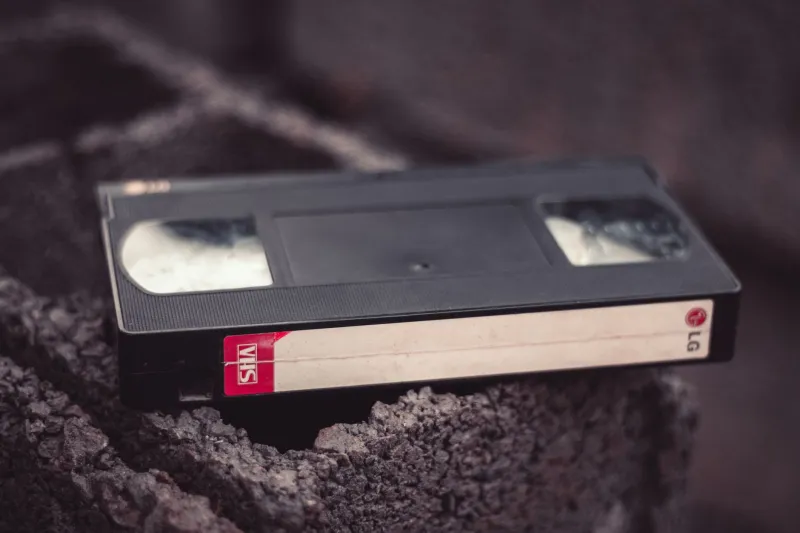
The night Brad Dourif died, horror forums and subreddits lit up with something that wasn't quite grief and wasn't quite celebration. It was a coordinated, communal act: people announcing which film they were putting on. Child's Play. Deadwood for some. Lord of the Rings for others. But a lot of people went straight to the horror catalog—the work where his particular brand of unhinged brilliance found its sharpest edge—and they watched alone, in the dark, with the specific intention of spending time with someone who was no longer there to be spent time with.
Call it grief streaming. It's a real phenomenon, it's more common than people admit, and horror is uniquely positioned at its center.
The Filmography as Ghost
Every actor leaves behind a body of work that functions, after their death, as a kind of preserved presence. The image moves. The voice speaks. The performance, whatever it was capturing in the moment of filming—nervous energy, physical genius, something the actor themselves might not have been able to name—is still there, still transmitting, decades after the person doing it stopped existing.
For most genres, this is a poignant but relatively straightforward relationship. You watch Audrey Hepburn and feel something sweet and sad. You watch James Dean and feel the particular ache of wasted potential. These are real emotional responses, but they're mediated by the distance of classical cinema, by the sense that you're watching history.
Horror doesn't offer you that distance. Horror puts its actors in extremity. It asks them to perform terror, to simulate dying, to embody threats and victims in ways that make the body the subject of every scene. When you watch a horror performance from someone who is now dead, the gap between the fiction and reality collapses in a way that it simply doesn't in other genres. They were pretending to be afraid of death. Now they're gone. The image of them fearing something, or being something terrifying, carries a charge that's genuinely hard to categorize.
Why Horror Specifically
There's a reason this ritual clusters around horror and not, say, romantic comedies. Horror is the only mainstream genre that takes mortality seriously as a subject—not as a plot device to create stakes, but as an actual preoccupation. The genre thinks about death constantly. It stages death, examines death, makes death the engine of its entire narrative machinery.
So when a horror actor dies, there's a strange symmetry available. The work they left behind is already about the thing that happened to them. Vincent Price spent decades playing characters in intimate conversation with death, decay, and the afterlife. Watching him now, post-death, doesn't feel like a departure from the work—it feels like the work completing itself. Like the last act finally arrived.
That's not a comfortable thing to say. But grief streaming isn't really a comfortable practice, and the people who do it aren't looking for comfort in any conventional sense.
The Ethics of the Preserved Image
Somewhere in here there's an ethical question worth sitting with. The actor consented to being filmed. They did not consent to being watched as part of someone's private grief ritual twenty years after their death. They couldn't have—the ritual requires their absence to function. You're not watching a performance anymore, exactly. You're watching a recording of a person who no longer exists, using that recording to process feelings about their nonexistence.
Is that use? Is it tribute? Is it something more troubling—a kind of consumption that treats the preserved image as a resource to be mined for emotional experience, with no obligation back to the person who generated it?
Most people who engage in grief streaming don't think about it this way. They're not doing philosophy. They're doing something instinctive and human—reaching toward the image of someone they valued because the image is what's left. The horror community, maybe more than any other fandom, has a sophisticated relationship with this kind of reaching. They've spent years watching images of death and violence and have developed a grammar for what those images mean that most people outside the community don't share.
The Séance Logic
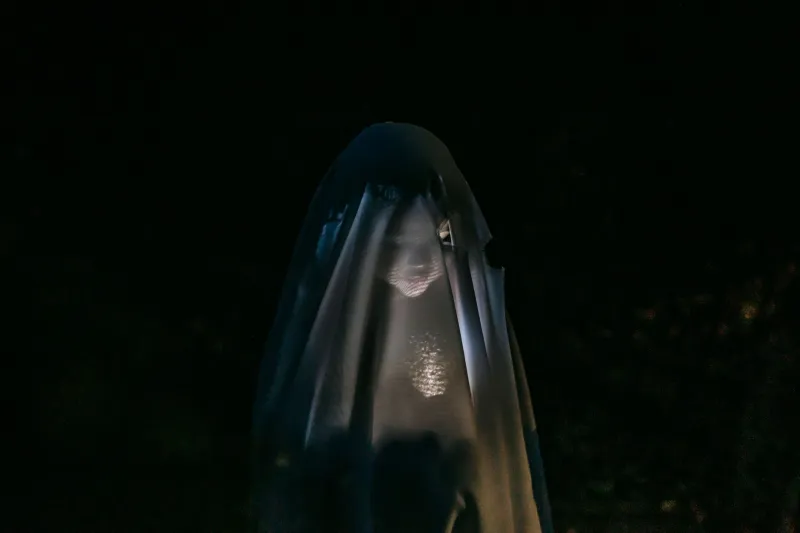
Here's what grief streaming actually is, stripped of the streaming platform interface: it's a secular séance. You're creating conditions under which the dead person appears. You're sitting in the dark, focusing your attention on their image, allowing their voice and face and presence to fill the room. You're communing with something that isn't there anymore by using the technology of cinema to make it appear to be.
Horror fans understand séances. The genre is full of them. And unlike most of popular culture, which treats death as something to be resolved or overcome, horror treats death as a condition—something permanent and present that you learn to live alongside rather than past.
Grief streaming is the same logic applied to real loss. The actor is gone. The image remains. You sit with the image and let it do what it does.
What It Actually Feels Like
People who do this describe the experience in weirdly consistent terms. There's comfort in it—but it's not soft comfort. It's the comfort of acknowledgment. Of saying: this person existed, this is the evidence of their existence, I'm going to be present with that evidence.
For horror fans specifically, there's something else underneath that. A recognition that the work these actors did was about exactly this—the fragility of the body, the persistence of presence after physical departure, the way the dead keep showing up in the spaces the living occupy.
Watching Gunnar Hansen stalk through that Texas farmhouse after his death isn't just nostalgia. It's a meditation on what it means that he was here and isn't anymore, delivered in the exact language he spent his working life speaking.
The screen is a window. Sometimes what's on the other side of it is a ghost. Horror fans figured that out a long time ago.