The Last Campfire: Who's Going to Remember Your Hometown's Monster?
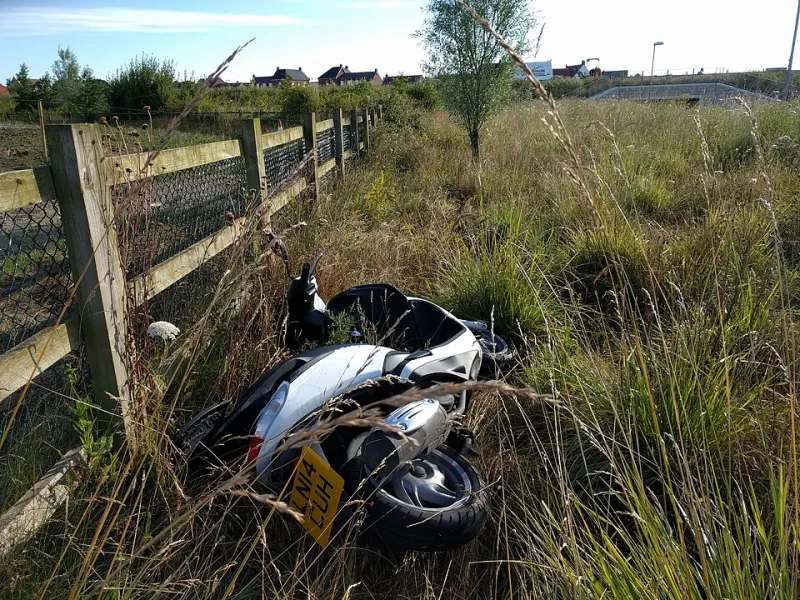
Photo: Rob Purvis , CC BY-SA 2.0, via Wikimedia Commons
Somewhere in your past there's probably a story. Maybe your grandfather swore the railroad bridge was haunted by a brakeman who lost his hand in 1911. Maybe the kids at your middle school all knew not to park on the road past the old dairy farm. Maybe your state has a lake creature, a hairy man of the woods, a woman in white who walks a specific stretch of highway every November.
Now ask yourself: does the kid growing up in your hometown today know that story? Increasingly, the answer is no. And that should bother anyone who claims to love horror.
The Great Flattening
American horror used to be regional the way accents used to be regional. New England had its witch-panic legacy baked into everything. Appalachia had its own dense, old-world-inflected folklore that never fully translated to anywhere else. The Gulf Coast had its swamp things and its loup-garou. The Southwest had its own warnings about things you don't talk about at night. Every region's fear food was locally sourced.
That's eroding from two directions at once. On one side, physical sprawl: the woods get bulldozed for a distribution center, the old farm becomes a subdivision with a name like Harvest Ridge, and the landmark the story was anchored to simply stops existing. Folklore is geography. Demolish the geography and the story loses its address.
On the other side, the feed. A kid in Ohio and a kid in Arizona now watch the same thirty horror creators, the same trend audio, the same urban-exploration format. The algorithm doesn't care where you are; it cares what keeps you scrolling. Local legend doesn't scale, so local legend doesn't get promoted. The result is a generation that can identify a Japanese internet ghost by name but doesn't know what's supposedly buried under their own county.
Why It Matters That We Care
You could shrug and call this nostalgia, but folklore isn't decoration — it's the raw ore of the entire genre. King built a career on Maine. Every small-town horror film you love works because somebody believed there was something specific about that specific place. Generic fear is fine. Local fear is true in a way nothing mass-produced can be. A haunted bridge you've actually crossed at night hits a nerve that a haunted bridge in a movie never will.
There's also a simpler loss: these stories were how communities talked to themselves. About danger, about death, about who belonged and who didn't, about what happened here before anyone alive could remember. Erase them and you erase a record that was never written down anywhere official.
The Archivists in the Trenches
The good news: people are fighting back, usually unpaid and unglamorous. County historical societies quietly collecting newspaper clippings about the local vanishings. Folklorists at state universities recording elderly storytellers before the recordings become the only copy. Amateur podcasters driving out to the crying bridge with a handheld recorder and treating a gas station attendant's secondhand story like precious archival material. Facebook groups — yes, really — where retirees trade memories of the same legend from four different decades and, piece by piece, reconstruct where the story came from and what it mutated from.
This work matters more than any single haunting. When a folklorist documents a legend properly — its variants, its origins, the landscape it lives in — they're not just preserving a campfire tale. They're keeping a door open for every writer, filmmaker, and haunt builder who comes next.
What You Can Do Tonight
Ask the oldest person you know what people were afraid of when they were young. Write the answer down — actually write it down, with names and dates. Find out what the story was in your town before the chainsaws and the fog machines. If there's a local history room in your library, spend an hour in it.
Horror on a screen is infinite now, and most of it tastes the same. The stories under your feet are finite, and they're going extinct one demolished landmark at a time. Somebody should be keeping them alive.
It might as well be you.