When Someone Dies, Horror Is the Only Genre That Doesn't Lie to You
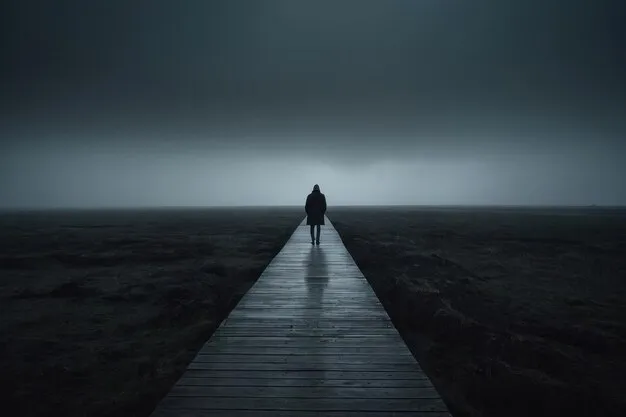
Photo: solitary figure watching dark screen at night grief moody atmospheric, via img.freepik.com
My uncle died on a Tuesday in November, and by Friday I was watching Hereditary alone in the dark for the second time that year.
I want to be clear: I was not okay. I was also not doing anything wrong.
Grief does strange things to your relationship with entertainment. The things that used to comfort you feel hollow or, worse, obscene — all that lightness and resolution and people laughing at things that don't matter. Rom-coms feel like dispatches from another planet. Action movies feel like noise. Even the dramas that are supposed to be about something tend to wrap their sadness in a narrative arc that ends somewhere redemptive, somewhere forward-moving, somewhere that implicitly tells you the point of grief is to be finished with it.
Horror doesn't do that. Horror knows better.
The Genre That Stays With the Body
There's a reason so many people, when pressed, will admit that they turned to dark fiction or horror specifically during the worst periods of their lives. It's not masochism. It's not a death wish. It's that horror is the only mainstream genre that treats death as a permanent, unmanageable, structurally central fact of existence rather than a plot device or a motivation for the living characters to do something more interesting.
In horror, death doesn't get resolved. The dead don't come back improved. The loss doesn't clarify into meaning. The monster doesn't explain itself and then go away. Things end badly, or they don't end at all — they just stop, mid-sentence, with the darkness still there.
For someone in genuine grief, that's not depressing. That's honest.
The five stages of grief, that tidy little model that gets plastered on every bereavement brochure in every hospital waiting room in America, has been largely repudiated by contemporary grief researchers. Real grief isn't a progression. It's not a series of phases you move through on the way to acceptance. It's chaotic and non-linear and it has a way of ambushing you in the cereal aisle three years after the fact. It doesn't end. It just changes shape.
Horror understands that. Horror was built on that.
What the Dark Fiction Actually Offers
There's a specific kind of film — The Babadook, Midsommar, A Monster Calls, The Haunting of Hill House in its TV adaptation — that has become almost canonically associated with grief. Not because they were marketed that way, but because bereaved audiences found them and recognized something.
The Babadook is, on its surface, a monster movie about a widow and her difficult son. It's also one of the most precise depictions of complicated grief ever committed to film — the way the monster grows in proportion to suppressed feeling, the way denying the darkness makes it stronger, the way the ending offers not a cure but a coexistence. You don't vanquish the Babadook. You learn to keep it in the basement.
If you've lost someone and you've tried to "stay strong" and "focus on the good memories" and "be there for the people around you," that metaphor will hit you somewhere very specific.
Midsommar is, among other things, about a woman who is given no space to grieve by the people closest to her, and what happens when she finally finds a community that lets her scream. The horror is real and the cult is genuinely sinister, but the emotional core of that film is about the violence of being told to get over it. A lot of bereaved people watched that movie and felt, uncomfortably, like they understood Dani completely.
Horror Communities as Grief Circles
Something happens in horror fan communities that doesn't get talked about enough. They function, informally and often without anyone naming it explicitly, as grief support spaces.
This isn't unique to online communities, though the online dimension amplifies it. Horror has always attracted people who are comfortable with the uncomfortable — people who have, for one reason or another, developed a tolerance for sitting with darkness rather than fleeing it. That tolerance doesn't appear out of nowhere. It tends to grow out of experience. Out of loss, trauma, illness, or simply a childhood that required a certain kind of premature familiarity with the fact that things end.
When those people gather — in subreddits, in Discord servers, at conventions, in the comments sections of horror review sites — they bring that shared fluency with them. Nobody has to explain why they find comfort in dark things. Nobody has to justify the fact that watching something genuinely frightening makes them feel less alone in their fear. The context is already established.
And so, quietly, these spaces become places where people mention they just lost a parent and nobody tells them to look on the bright side. Where someone says they've been watching nothing but The Ring and Session 9 for two weeks and the response is not concern but recognition.
The Recommendations That Actually Help
If you're in it right now — if someone you loved is gone and the mainstream grief resources feel like they're speaking a language you don't understand — here's what has actually helped people in the Blood Cube community.
For the raw, early stage: The Babadook (2014), Hereditary (2018), Relic (2020). These films don't flinch from grief's ugliness. They won't ask you to feel better.
For the strange, dissociated middle: A Ghost Story (2017), The Others (2001), Lake Mungo (2008). These are quieter films about presence and absence, about the way the dead stay and the way they don't.
For when you're ready to feel something other than numb: Midsommar (2019), The Haunting of Hill House (series, 2018), Crimson Peak (2015). These films let grief get loud. They let it be operatic and irrational and consuming. They make space for the size of it.
For the long haul: Stephen King's Pet Sematary — the novel especially — is the most honest thing ever written about the bargains we make when we can't accept that someone is gone. It doesn't end hopefully. It ends correctly.
Why This Matters
We tend to talk about horror as escapism, and sometimes it is. But for bereaved people, the genre serves a different function entirely. It's not escape. It's company.
The darkness in horror says: I know this doesn't resolve. I know the loss doesn't become a lesson. I know you're still here and they're not and that's just how it is now. It doesn't ask you to be grateful for what you still have. It doesn't reframe the absence as a gift. It just sits with you in the room where the grief lives and doesn't pretend the room is going to be empty anytime soon.
That's not nothing. For a lot of people, in the worst moments of their lives, it's everything.
I watched Hereditary on that Friday because I needed something that wouldn't lie to me about what loss feels like. It didn't fix anything. It wasn't supposed to.
But it stayed.