The Unshared List: Inside the Underground Horror Communities That Refuse to Spread the Contagion

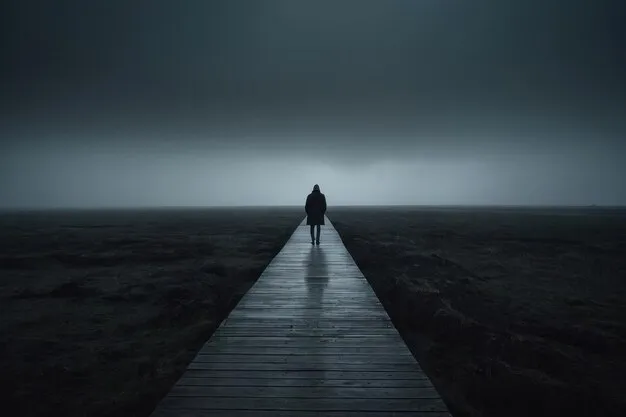
Photo: Elliott Brown from Birmingham, United Kingdom, CC BY-SA 2.0, via Wikimedia Commons
Every film community has its whisper network. The titles that circulate through DMs instead of Reddit threads. The stuff you only mention to people you already trust. But in certain corners of extreme horror fandom, that whisper network has gone a step further—it's gone silent entirely.
These aren't people protecting their taste from casual dilution. They're not snobs guarding a secret handshake. They're something harder to categorize: fans who've decided that some content carries genuine risk, and that the responsible thing to do with it is stop.
The Film That Doesn't Get Shared
There's no single title that anchors this conversation, which is partly the point. Ask around in the right circles—the forums that don't show up in Google results, the Discord servers that require vouching to enter—and you'll find people who describe encountering a film or piece of media that fundamentally changed them, not in the way horror usually changes you, but in a way they can't fully reverse.
They won't name it. Not because they're being dramatic, but because naming it is the first step toward spreading it, and spreading it is what they've decided not to do.
"I watched something about four years ago that I found through a recommendation chain," one member of a private forum told Blood Cube over encrypted message. "Three people in that chain later said they wished they hadn't seen it. One of them said it cost them a relationship. I'm the end of that chain."
This is the defining logic of what some in these communities call "protective curation"—the idea that the act of recommending carries moral weight, and that some content is too psychologically loaded to pass forward without consequence.
Not Gatekeeping, But Something Adjacent
The distinction between gatekeeping and protective curation matters to the people making it, and it's worth taking seriously.
Gatekeeping, in the traditional fan-culture sense, is about exclusion. You keep people out to preserve the specialness of the in-group, to maintain status, to protect a community from people who don't deserve it. It's hierarchical and often ugly.
Protective curation runs on a different logic entirely. The people practicing it aren't keeping content away from others because those others aren't worthy—they're keeping it away because they've concluded that the content itself is a kind of hazard, and that spreading hazards is irresponsible regardless of the recipient's credentials.
"I'd give a stranger a horror recommendation all day," one community moderator explained. "What I won't do is hand someone something I know has a real chance of hurting them and call it a gift."
The analogy that comes up most often in these conversations is pharmaceutical: you wouldn't share a prescription medication just because it helped you, because the dose, the context, and the individual all matter in ways you can't fully assess from the outside.
What Counts as Too Far
The content these communities are protecting around tends to cluster in a few categories, none of which map neatly onto conventional content warnings.
Some of it is extreme in the obvious sense—graphic, unflinching, built to disturb. But plenty of extreme horror gets shared freely, even celebrated. The stuff that ends up on the unshared list is extreme in a different register: psychologically invasive rather than viscerally shocking. Films and videos that don't just frighten but burrow. Content that seems calibrated to exploit specific vulnerabilities—grief, isolation, paranoia—in ways that linger past the viewing experience.
Some of it is more ambiguous. Documentaries that blur ethical lines in their production. Found footage with disputed origins. Content that sits in the uncomfortable space between art and exploitation without ever resolving.
What unites it, according to the people who've seen it and chosen not to share it, is a quality they struggle to articulate: the sense that the experience doesn't stay in its container. It follows you.
The Ethics of Silence
Not everyone in extreme horror circles thinks protective curation is the right call. There's a legitimate counter-argument, and it gets made often.
The counter-argument goes like this: adults have the right to access difficult content. Deciding for someone else that they can't handle something is paternalistic, even when it comes from a place of genuine care. Art that disturbs, that wounds, that doesn't let you go—that's been part of human culture forever, and the people who've encountered it and survived (even changed) have generally been glad they did.
There's also the question of what silence actually accomplishes. If something exists, it can be found. The people most likely to find it without guidance are the people least equipped to contextualize it—exactly the people protective curators say they're trying to protect.
"I've started to think keeping quiet is just a way of feeling clean," one long-time horror fan and occasional film critic wrote in a private thread that Blood Cube was given access to. "You don't actually protect anyone. You just protect yourself from feeling responsible."
That's a hard argument to dismiss. Protective curation can slide into a kind of moral laundering—keeping your hands clean while the content circulates anyway through other channels.
A Shadow Film Culture
What's genuinely interesting about these communities, beyond the ethics debate, is what they're building in the absence of viral sharing.
Without recommendations flowing outward, these groups have developed extraordinarily dense internal cultures around the content they do discuss. There's more analysis, more processing, more sustained conversation about specific films than you'll find in any mainstream horror community. When you can't just push something out into the world and move on, you're forced to actually sit with it.
In a media landscape optimized for throughput—watch it, rate it, recommend it, next—that enforced slowness is genuinely countercultural. These are communities that have decided some experiences deserve more than a five-star rating and a share.
Whether their silence is wisdom or cowardice probably depends on the specific content and the specific person. But the instinct behind it—that some things carry weight, and weight has to be handled carefully—feels like one of the more honest responses to what extreme horror actually is.
The most powerful dark content was never meant to be viral. It was meant to be survived.