The Real Monsters Were in the Family Tree All Along
Every family has a story that doesn't quite get told at the dinner table. An uncle nobody mentions. A death that happened under circumstances no one ever fully explained. A house that got sold too fast. A grandmother who "wasn't well" in ways that nobody elaborated on. The thing in the attic that turned out to be boxes, except nobody ever actually opened the boxes.
Grow up inside enough of that ambient mythology and something happens to your relationship with horror. It stops being escapism and starts being recognition.
The Mythology You Didn't Ask For
American families are remarkably good at generating horror material. Not intentionally — at least not usually — but through the ordinary accumulation of silence, omission, and the particular way that difficult truths get encoded into family behavior rather than family conversation.
You don't get told that great-uncle Raymond was institutionalized. You get told not to ask about Raymond. You don't get told that your grandfather did something that split the family in two. You get told that certain relatives don't come to Christmas anymore, and the subject changes before you can ask why. You don't get told that the house you grew up in had a previous occupant who left under bad circumstances. You just notice, eventually, that your parents never talked about who lived there before.
This is the architecture of inherited darkness. Not dramatic, not cinematic — just the persistent low hum of things that were never said, questions that were never answered, gaps in the family narrative that your brain, being a brain, fills in with something.
For a lot of horror fans, what the brain fills those gaps with is the stuff of the genre they love.
When Fiction Rhymes With History
There's a reason certain horror subgenres hit some people harder than others, and it's not always about craft or cinematography. Sometimes it's about resonance. The film is doing something that maps onto a real wound, and the impact isn't aesthetic — it's personal.
Family horror — the subgenre that treats the domestic unit itself as the threat — lands differently for people who grew up in houses where something was wrong but nobody named it. Films like Hereditary, The House That Jack Built, or We Need to Talk About Kevin aren't just disturbing. For some viewers, they're eerily familiar. The texture of the dysfunction, the way secrets move through a household like weather, the sense that the people who were supposed to protect you were themselves something to be protected from — it maps.
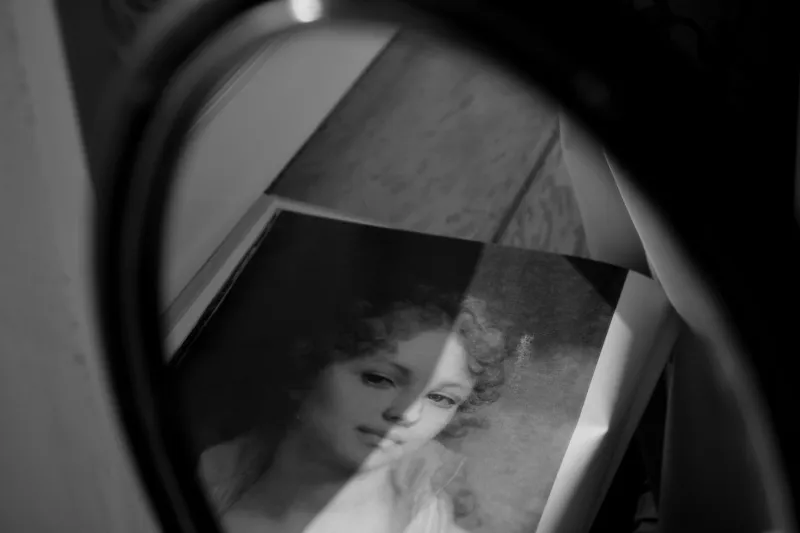
Gothic horror does something similar for people with family histories involving old money, inheritance disputes, or the specific kind of generational damage that comes from families who've been carrying something heavy for a very long time. The crumbling estate, the portrait that doesn't quite look right, the legacy that corrupts — these aren't just metaphors. For some audiences, they're lightly fictionalized autobiography.
Possession narratives hit differently for people who watched a family member disappear into addiction or mental illness. Haunted house films hit differently for people who grew up in homes where something happened before they arrived. Body horror hits differently for people who inherited a complicated relationship with their own physicality through family illness or trauma.
The genre isn't random. It's a library, and people check out the books that speak to what they already know.
Processing by Proxy
There's a legitimate therapeutic argument to be made here, though it doesn't require clinical language to understand. Horror provides a container for experiences and fears that don't have other containers.
If you grew up in a household with an alcoholic parent, nobody handed you a framework for processing that. There was no formal ritual, no communal acknowledgment, no story that said this is what happened to you and here's what it means. What you got was the experience itself, raw and uncontextualized, and then you got to carry it forward into adulthood and figure out what to do with it.
Horror gives you the container retroactively. The film isn't your family — the monster isn't your father, the haunted house isn't your childhood home — but the emotional logic overlaps enough that engaging with the fiction becomes a way of engaging with the reality. At a safe remove. With a narrative structure that the actual experience didn't have.
A lot of horror fans describe this without quite naming it. They'll say a particular film "got to them" in a way they couldn't fully explain. That it felt personal even though it was clearly fiction. That they've watched it multiple times not because it's pleasant but because it's doing something they need it to do.
That's not a coincidence. That's the genre working exactly as intended.
The Secrets That Make Better Stories Than the Stories
Here's the uncomfortable part: real family darkness is often more narratively compelling than what horror writers invent.
The uncle who disappeared in 1987 and whose name became unspeakable — that's a better mystery than most crime thrillers. The grandmother who burned all her photographs before she died and never explained why — that's a better horror premise than half the films released this year. The branch of the family that moved across the country and cut contact, and the thing that supposedly happened that caused it, and the way different relatives tell different versions of that story — that's Gothic fiction, except it's real and you're living inside it.
Horror fans who carry this kind of material often have a particular relationship with the genre's tropes. They're not just consuming them as entertainment. They're in conversation with them. The trope activates something personal; the personal thing gets processed through the trope; the fan comes out the other side having done something that isn't quite therapy but isn't quite entertainment either.
What the Dark Already Knew About You
The horror you gravitate toward isn't random. It's shaped by the specific contours of what you already carry — the mythology your family handed you, the silences that raised you, the questions that never got answered and probably never will.
Maybe that's why horror fans often describe the genre as feeling like home in a way that other genres don't. Not because home is safe — for a lot of people it wasn't — but because home is where the first dark things lived. The genre speaks the language of that original darkness. It knows the grammar of secrets and silence and the particular dread of a family story with missing pages.
You didn't choose the darkness your family gave you. But you found a genre that knew exactly what to do with it.