Already Dead: The Horror Fans Who Need to Know How It Ends Before It Begins
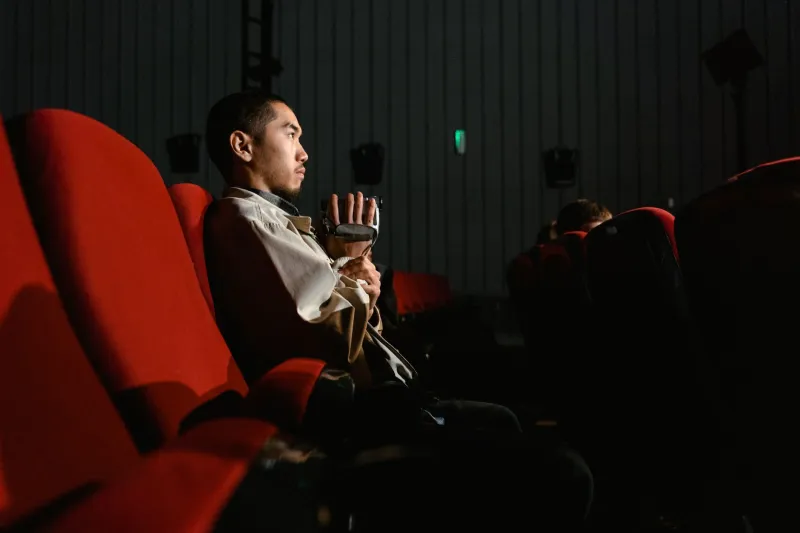
There's a specific kind of person who, the moment a new horror film drops, immediately opens a browser tab and types the title followed by the word "ending explained." They're not confused. They haven't seen it yet. They just need to know who dies before they agree to watch anyone bleed.
This is not a small group. Horror forums are full of them. Reddit threads get thousands of upvotes when someone posts a thorough breakdown of a film's kills, twists, and final scene — and the comments beneath are packed with people saying thank you, now I can actually watch this. It's a phenomenon that baffles casual viewers and frustrates filmmakers who spent years engineering a perfect third-act gut-punch. But for the people doing it, the logic is airtight.
So what's actually going on here?
The Illusion of Control in a Genre Built to Destroy It
Horror's entire mechanical purpose is to strip you of control. The director hides information. The score lies to you. Characters die when you've decided they're safe. The genre runs on your helplessness, and it's very, very good at manufacturing it.
Spoiler-seeking flips that power structure entirely.
When you already know the masked killer targets the brunette first, that he survives the ending, that the twist is the house itself — you're no longer a passive victim of the narrative. You become something closer to a forensic observer. You watch the film knowing what the characters don't, and that foreknowledge transforms the experience from one of fear into one of grim appreciation. You're not screaming at the screen. You're studying it.
Psychologists who study anxiety-driven behavior recognize this pattern immediately. Foreknowledge is a classic coping mechanism. When we can anticipate a threat — even a fictional one — our nervous system registers it differently. The jump scare still lands, but the cortisol spike is smaller. The dread is contained. You've pre-processed the worst of it, and now you can actually pay attention to everything else the film is doing.
For horror fans who consume the genre obsessively, that shift isn't a bug. It's the whole point.
Spoilers as a Second Language
Here's something the anti-spoiler crowd tends to miss: for people deep in horror culture, the twist isn't actually the product. The craft is.
When you already know that the monster is the protagonist's dead sister, you stop waiting for the reveal and start watching how the director plants the clues. You notice the color grading change in flashback sequences. You catch the costume designer's deliberate choice to dress the sister's ghost in the same shade of green as the bedroom curtains. The film opens up in a completely different way.
This is how horror superfans consume the genre differently from general audiences. A first-time viewer experiences the story. A spoiled superfan experiences the construction of the story. Both are valid. But for the person who's watched three hundred horror films, the construction is often the more interesting layer.
There's also a community dimension here that doesn't get enough attention. Horror fandoms are intensely social. Knowing the ending before you watch means you can participate in the conversation happening around the film in real time — on Discord, in comment sections, at watch parties. The alternative is a spoiler blackout that lasts however long it takes you to find two free hours, during which you're essentially locked out of the cultural moment. In an era where online discourse moves at the speed of a trending hashtag, that's a real cost.
The Immunity Theory
Some fans describe their spoiler-seeking behavior in almost medical terms. They talk about "building up a tolerance" or "getting the shock out of the way." One horror podcast host described it as "pre-grieving the characters so you can actually enjoy the film instead of spending two hours dreading losing them."
That's a fascinating inversion. Horror traditionally weaponizes your attachment to characters — you like them, so their deaths destroy you. Foreknowledge lets you detach slightly, which sounds like it would ruin the emotional experience. But many fans report the opposite. Knowing a beloved character dies in the third act doesn't eliminate grief. It just relocates it. Instead of a sudden ambush of emotion, you carry a low-grade sadness through the whole film, watching them live knowing they won't. That's not less devastating. In some ways it's worse.
This is the thing about horror's relationship with spoilers that nobody talks about honestly: knowing what happens doesn't necessarily defang the content. It changes the shape of the dread, but dread survives.
When the Surprise Was Never the Point
It's worth asking whether the horror genre has quietly outgrown the idea that surprise is its primary weapon anyway.
The most critically celebrated horror of the last decade — Hereditary, Midsommar, The Witch, Men, Talk to Me — doesn't really depend on you not knowing what's coming. These films announce their intentions early and then execute on them with suffocating precision. You know something terrible is going to happen to that family. You watch it happen anyway. The dread isn't in the unknown. It's in the inevitable.
If that's the direction prestige horror is moving — and it clearly is — then spoiler culture isn't at odds with the genre. It's actually aligned with the genre's own evolution.
The horror that hits hardest anymore isn't the shock you didn't see coming. It's the one you saw coming from the first frame and couldn't stop.
The Part Nobody Admits
There's one more layer here that fans rarely volunteer in polite conversation: some of them seek spoilers because they've been genuinely traumatized by horror content before and they're trying to protect themselves.
Someone who had a panic attack during a particular film. Someone whose intrusive thoughts latched onto a specific type of horror imagery. Someone who watched something as a kid that they absolutely were not ready for. These people still love the genre. They still show up. But they need to know what's in the box before they open it.
Spoiler culture, at its most human, is just people trying to stay in a relationship with something they love without letting it destroy them.
That's not a failure of nerve. That's just being smart about your own limits.
And if you've spent any time in horror spaces, you know that's actually pretty respectable.