The Disappearing Shelf: What Gets Erased When Transgressive Media Goes Underground
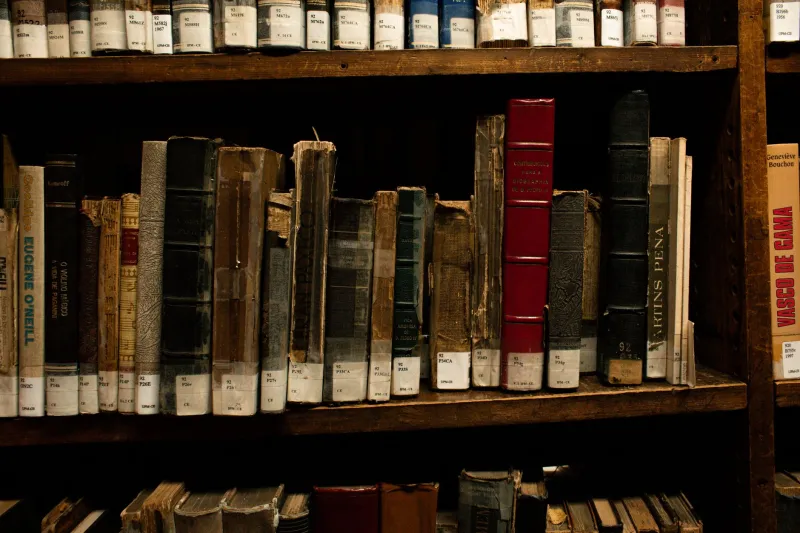
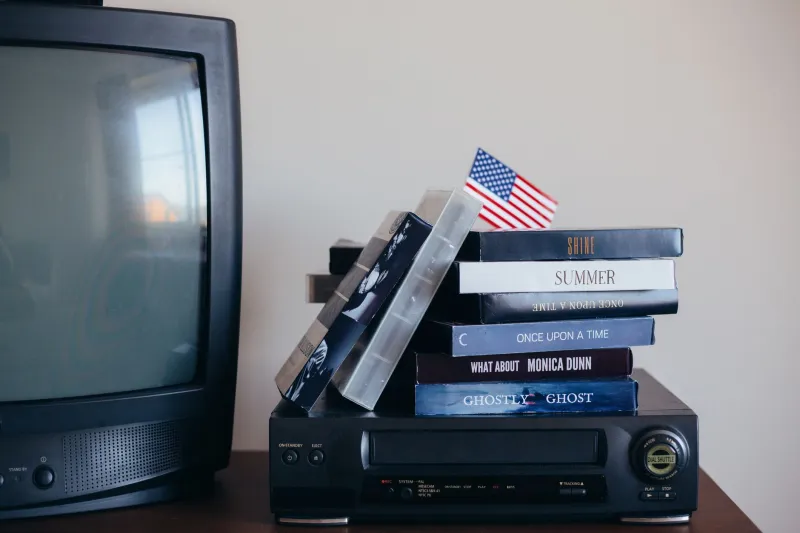
Somewhere in a climate-controlled storage unit outside Portland, there are seventeen boxes of media that their owner won't fully inventory over email. Not because he's embarrassed. Because he's worried about what a written list might eventually become.
"I have things that don't exist anywhere else," says the collector, who goes by Voss online and has been acquiring transgressive film and print media for about two decades. "And I'm increasingly aware that 'doesn't exist anywhere else' is a category that keeps growing."
The erasure of extreme, transgressive, and boundary-violating media has accelerated in ways that even pessimists didn't fully predict. It's not happening through dramatic legal battles or public bonfires. It's happening quietly — through terms-of-service updates, creator-side takedowns, platform algorithm suppression, and the slow social pressure that makes certain titles radioactive to host or sell.
What's Actually Disappearing
The conversation usually starts with the obvious targets: extreme horror films that crossed lines around violence, sexuality, or exploitation. The Video Nasties panic of 1980s Britain left a cultural template that keeps getting reinvoked. But the current wave is broader and stranger.
It's not just gore. It's transgressive literature that uses language no publisher would greenlight today. It's instructional content that exists in legally ambiguous space. It's experimental film that was never widely distributed to begin with and is now being quietly removed from the few platforms that hosted it. It's recordings, zines, and early internet artifacts that challenge contemporary frameworks around representation, consent, and harm in ways that make everyone nervous.
Some of it probably should be hard to access. But the mechanism doing the sorting isn't a court or a critic — it's an algorithm, a content moderation team working from a policy document, or a creator who got spooked and hit delete.
"The problem," says Voss, "is that nobody's making these decisions based on artistic merit or historical significance. They're making them based on liability. And liability is a terrible curator."
The Collector Class
The people fighting to preserve this material occupy a strange position. They're not defending everything they own. Many are deeply ambivalent about specific titles in their collections. But they share a conviction that the existence of difficult material — even material they find uncomfortable — matters in ways that exceed any individual piece.
Amanda, a 44-year-old archivist in Chicago who focuses on transgressive print media, frames it in institutional terms. "Libraries have always held material that individual librarians found objectionable," she says. "That's the whole point. The archive isn't an endorsement. It's a record. When we start curating based on contemporary comfort, we're not protecting people — we're protecting ourselves from the discomfort of preservation."
Her collection includes out-of-print horror fiction, underground comix, and several volumes that major online retailers have stopped carrying without explanation. She's watched sellers get banned from platforms mid-transaction. She's seen private Facebook groups dedicated to collector networking disappear overnight.
The Forbidden Object Effect
Here's what every collector will tell you, and what the platforms seem not to have considered: suppression makes things more powerful, not less.
There's a body of research on what psychologists call psychological reactance — the tendency to want something more intensely when access to it is restricted. In the context of transgressive media, this effect is supercharged. A film that circulated quietly for decades with a modest cult following becomes a legend the moment it's pulled. The difficulty of finding it becomes part of the experience. The artifact accrues meaning from its inaccessibility.
"Every time something gets banned, it becomes more interesting to exactly the people you were trying to keep it from," says Voss. "The Streisand Effect is real, and in horror and transgressive media, it's on steroids. You can't suppress your way to safety. You just create a black market with mystique."
This isn't a hypothetical. Films that were freely available on early streaming platforms and generated little attention have, since their removal, become objects of obsession. Collectors pay serious money for physical copies. Fan communities form specifically around the inaccessibility. The erasure becomes the mythology.
The Preservation Problem
Beyond the philosophical question of whether difficult art should exist is the practical question of who gets to decide what survives.
Film preservation organizations have long grappled with the reality that cultural significance isn't always legible in the moment. Films dismissed as exploitation trash in the 1970s are now studied as documents of their era — artifacts of what audiences wanted, what filmmakers could get away with, what the culture was processing. The same will be true of the transgressive media being quietly deleted today.
"We're going to lose things that matter," Amanda says flatly. "Not because anyone decided they were worthless. Because nobody was paying attention, and then they were gone."
Digital preservation is its own nightmare. Files get corrupted. Hosting services die. Formats become unreadable. The internet's promise of infinite storage has turned out to be a fantasy — what actually persists is what someone chose to keep, in a format that still works, on a drive that didn't fail.
Voss has started teaching himself film digitization. He's connecting with other collectors to create redundant copies of the rarest material. He's doing this quietly, for reasons that should be obvious.
The Question Nobody Wants to Answer
Is there a line? Is there material that genuinely shouldn't be preserved?
Every collector interviewed for this piece said yes, and nobody agreed on where the line was. That disagreement is the point. These are hard questions, and they deserve deliberate, informed engagement — not algorithmic default settings and liability-driven deletion.
What's being lost right now isn't just content. It's the record of what humans were willing to make and watch and read and feel. That record is uncomfortable. It should be. Discomfort is information.
The shelf is disappearing. And most people won't notice until it's gone.