Broken Early, Fluent Later: How a Scary Childhood Builds the Perfect Horror Brain
Ask a committed horror fan when it started and watch their eyes go somewhere else for a second. Not to a theater. Not to a streaming queue. Back to a hallway, maybe. A basement. A cousin's house where somebody left The Exorcist running on a Saturday afternoon and nobody thought to check who was watching.
There's a pattern here that the genre doesn't talk about enough — the uncomfortable overlap between difficult early lives and deeply sophisticated adult horror taste. It's not a clean correlation, and it's not a comfortable one. But it's real, and it's worth sitting with.
The Forbidden Tape Theory
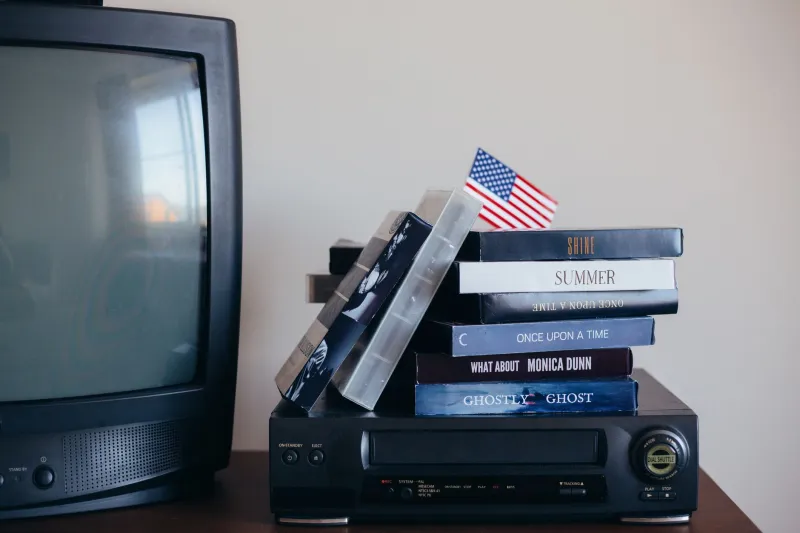
For a certain generation of horror fans — mostly older millennials and Gen X, but the pattern shows up across ages — the origin story involves something they weren't supposed to see. A VHS tape left out. A cable channel nobody blocked. An older sibling who thought it was funny. The horror arrived before they had any framework to hold it, and something in the brain responded by building one fast.
"I watched Hellraiser when I was seven because my uncle fell asleep," says Marcus, a 38-year-old from outside Columbus who runs a small horror review channel with about 40,000 subscribers. "I didn't sleep right for a month. But I also couldn't stop thinking about it. I needed to understand what I'd seen. That need never went away."
Dr. Pamela Osei, a clinical psychologist who has written about media consumption and early trauma, describes this as a kind of involuntary inoculation. "When a child encounters something overwhelming and survives it — emotionally, psychologically — they sometimes develop a relationship with that category of experience that's fundamentally different from someone who encountered it on their own terms later," she explains. "They've already proven to themselves they can endure it. That's powerful."
Playground Mythology and the Oral Horror Tradition
Not every formative scare came through a screen. The oral tradition of childhood horror — the urban legends, the half-whispered stories about what happened to some kid two towns over, the Bloody Mary rituals in school bathrooms — functions as a kind of distributed horror education that researchers have largely ignored.
These stories weren't passive consumption. They required participation. You had to tell them, embellish them, test them against your friends' reactions. You learned, through repetition, what made fear land. You became a tiny, unconscious student of the craft.
Many adult horror fans who grew up in communities with strong oral storytelling traditions — rural areas, tight-knit immigrant neighborhoods, places where adults talked around rather than to children — report an unusually high comfort with ambiguity in horror. They're not looking for the monster to be explained. They grew up with stories that never explained anything.
The Overheard Secret and the Horror of Adult Reality
There's another category that's harder to talk about: kids who learned fear not from fiction but from family. The argument through the wall. The thing nobody discussed at dinner but everyone felt. The adult conversation that stopped the second you walked into the room.
This kind of early exposure to unspoken dread — to the understanding that the people who were supposed to protect you were themselves afraid, or dangerous, or lost — creates a specific relationship with horror as an adult. The genre becomes, for these fans, a place where the unspeakable is finally spoken. Where the monster has a face. Where the threat is external and visible rather than ambient and domestic.
"Horror gave me vocabulary," says Dani, 31, from Atlanta. "My home life was chaotic in ways nobody named. Horror named things. It said: this is what dread feels like, this is what it looks like when something is wrong and everyone is pretending it isn't. I felt seen by horror before I felt seen by anything else."
This isn't a fringe experience. Fan forums and Reddit communities dedicated to horror are full of variations on this sentiment — people who found the genre not despite their difficult childhoods but because of them.
Does Horror Attract the Broken, or Break People Further?
This is where it gets complicated. The easy narrative — horror as therapeutic container for early trauma — is appealing but probably incomplete.
Dr. Osei is careful here. "There's a difference between using horror as a controlled space to process fear and using it to reinforce a worldview where harm is inevitable and trust is foolish," she says. "For some people, it's genuinely generative. For others, heavy horror consumption can function as a way of staying inside the wound rather than moving through it."
The genre itself doesn't sort this out. It doesn't know your history. It just delivers dread at scale and lets you do what you will with it.
What does seem true is that people who came to horror through early adversity tend to engage with it more analytically. They're not just scared — they're studying. They notice craft, subtext, the mechanics of how a filmmaker builds unease. They've been students of fear since childhood, even if nobody gave them a syllabus.
The Sophisticated Palate Problem
Here's the dark irony: the same difficult history that makes someone a deeply perceptive horror fan can also make it nearly impossible to satisfy them. Once you've been genuinely scared — not movie-scared but life-scared — a lot of horror feels thin. Jump scares read as cheap. Obvious villains bore you. You've already met something worse.
Marcus puts it plainly: "Most mainstream horror doesn't touch me anymore. I need something that gets into the psychology, something that makes me feel like the director has been somewhere uncomfortable. Otherwise it's just noise."
This is the trap embedded in the title. The childhood that made you fluent in fear also raised your floor so high that the genre has to work twice as hard to reach you. You're the ideal audience and the hardest one to please, simultaneously.
And somehow, that feels exactly right.