Stress Test: The Horror You Choose Reveals the Person You're Afraid You'd Become
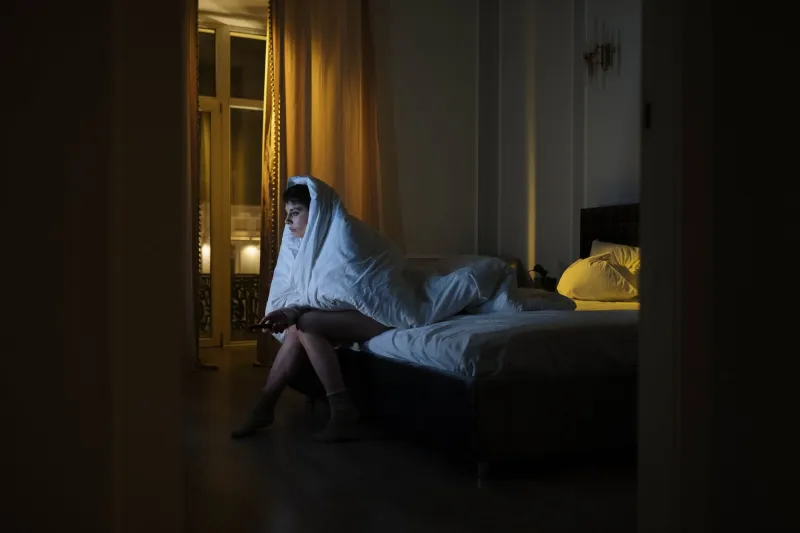
In the spring of 2020, while grocery stores were rationing toilet paper and people were wiping down their mail with Lysol, something interesting happened on streaming platforms. Horror surged — but not evenly. Viewers weren't reaching for slashers or supernatural ghost stories. They were pulling up The Road, 28 Days Later, The Mist. Pandemic and survival horror specifically. Stories about ordinary people deciding, under pressure, how much of their humanity they were willing to spend.
You can read that as escapism. Or you can read it as something more unsettling: a mass, unconscious rehearsal for a test nobody wanted to take.
The Genre as Moral Simulator
Horror has always functioned, at least partly, as a laboratory for ethics under duress. The genre's most enduring questions aren't really about monsters — they're about people. Would you leave someone behind? Would you lie to protect yourself? Would you hurt someone to feed your children? The monster is just the pressure system that forces the question.
What changed during the pandemic wasn't the questions. It was the context. For the first time in living memory, a significant portion of the American public was experiencing genuine scarcity anxiety, genuine uncertainty about institutional reliability, and genuine fear about the people around them as potential vectors of harm. The horror they reached for reflected that.
"There's a concept in psychology called anxiety regulation through narrative," explains Dr. Jerome Tate, a behavioral researcher who has studied media consumption during crisis periods. "We use stories to model scenarios we're afraid of. The goal isn't to scare ourselves — it's to run the simulation in a safe container so the real thing feels less catastrophic."
In other words: we watch The Mist because we need to know what we'd do in the parking lot.
What Your Subgenre Says About You
Not all horror hits the same psychological buttons, and the distinctions matter. Consider what the most popular pandemic-era subgenres were actually about:
Survival horror — The Road, A Quiet Place, Bird Box — centers on scarcity and the cost of protecting the people closest to you. Viewers drawn to this subgenre tend to be running anxiety about responsibility. They're not afraid of dying. They're afraid of failing the people depending on them.
Betrayal and paranoia horror — The Thing, Invasion of the Body Snatchers, Us — is about the collapse of trust in familiar faces. This one surged hard in 2020, and it doesn't take a psychologist to understand why. When the people around you became potential threats simply by breathing, the fantasy of a world where you couldn't trust anyone felt less like fiction and more like documentation.
Social collapse horror — 28 Days Later, The Walking Dead, Snowpiercer — is about what happens to systems. Laws. Institutions. The unspoken agreements that make civilization work. Audiences drawn here are often processing anxiety about authority and infrastructure — the creeping suspicion that the whole thing is more fragile than advertised.
None of these preferences are random. They're diagnostic.
The Question You're Really Asking
Here's the uncomfortable part. When you watch a character in The Mist make an unforgivable decision to protect themselves, and you feel something other than pure revulsion — when some part of you understands, or even agrees — that's information about you. The horror isn't just on screen.
This is what the genre does at its best: it creates conditions where your own moral flexibility becomes visible to you. You thought you knew where your line was. The movie just showed you it might be further than you thought.
"I watched The Road four times in 2020," says Keisha, a 34-year-old teacher from Detroit. "I told myself it was because I loved the cinematography. But honestly? I was trying to figure out if I was the father or if I'd turn into something else. I needed to know."
She's not alone. Pandemic-era horror viewership data consistently showed repeat viewing at unusually high rates for survival and betrayal subgenres. People weren't just watching — they were studying.
The Collective Moral Hangover
What did we learn about ourselves? The answer, filtered through four years of post-pandemic reflection, is messy.
We learned that people will hoard. We learned that community solidarity is real and fragile in equal measure. We learned that the neighbor who seemed normal will absolutely buy a generator and not tell anyone. We learned that institutional trust can dissolve faster than anyone expected, and that the vacuum gets filled by whatever's loudest.
Horror fans already knew all of this. They'd run the simulation a hundred times. Whether that preparation actually helped them behave better in 2020 is a different question — and one that nobody's research has cleanly answered.
"Watching horror doesn't make you more ethical," Dr. Tate says carefully. "What it might do is make you more honest about your own capacity. That's not the same thing as being a better person. But it might be a prerequisite for it."
What to Watch If You Want to Know Yourself
If you're willing to run your own stress test, some recommendations that function less as entertainment and more as mirror:
-
The Mist (2007): Frank Darabont's adaptation of Stephen King goes places most studio horror won't. The ending alone is a moral gut-punch that people argue about for years. Watch it and pay attention to which character you're defending.
-
Pontypool (2008): A contained, claustrophobic horror about information, trust, and what happens when you can't verify anything. Feels almost ripped from 2020.
-
Coherence (2013): Low-budget, high-anxiety, and brutally honest about how quickly people abandon fairness when the stakes get real. One of the best moral horror films ever made.
-
Alive (1993): Technically not horror, but the questions it asks about survival and acceptable behavior are harder than anything in most genre films.
Watch them alone. Watch them honest. Notice what you're rooting for.
The horror you choose tells you something. The question is whether you want to know what it is.